/

Transport

Transport

Petrobras trials biodiesel-blended bunker fuels and starts commercialization

Petrobras has demonstrated the technical feasibility of using biodiesel-blended bunker fuels in commercial shipping through laboratory testing and successful sea trials. The results have supported commercial approval for blends containing up to 24% biodiesel, offering a near-term pathway to lower greenhouse gas emissions from maritime transport.

First Transpetro Vessel Test with VLSFO and Biodiesel Blend

biodiesel in marine fuel

0 % renewable content

GHG emissions reduction

0 %

bunker fuel used in sea trials

0 litres
In this case study:

Developing lower-carbon marine fuels

Petrobras is advancing its commitment to a lower-carbon future through the development of bunker fuels containing renewable content for the maritime sector.

During the first phase of the project, extensive laboratory testing was conducted at the company’s Research, Development and Innovation Center. Following the selection of marine fuel and biodiesel samples, the tests showed no adverse impact on compliance with the key fuel quality requirements established by ISO 8217:2017. Additional evaluations covering combustion performance and blend stability also delivered positive results, supporting the progression to vessel field trials.

Testing biodiesel-blended bunker fuels

Building on the laboratory phase, Petrobras successfully completed all planned sea trials involving bunker fuel blends containing 10% and 24% fatty acid methyl ester (FAME) by volume.

The results demonstrated the technical feasibility of using biodiesel-blended marine fuels across the tested concentrations in commercial shipping operations. The campaign also validated the blending methodology under different feedstock scenarios and bunkering procedures.

Validating performance in real-world conditions

Throughout the trials, no abnormal events were observed in the operation of the vessels’ main engines or fuel treatment systems, including purifiers and filters. The successful performance of the blends under real operating conditions reinforces their potential as a near-term solution for reducing greenhouse gas emissions from maritime transport.

Enabling commercial use in Brazil

The project is part of Petrobras’ broader strategy to support decarbonization of the shipping industry by developing lower-emission fuel alternatives that can be integrated into the existing fleet and infrastructure.

The positive outcomes of the testing program also supported the granting of a special authorization by Brazil’s National Agency of Petroleum, Natural Gas and Biofuels (ANP), enabling Petrobras to commercially market bunker fuel blends containing up to 24% v/v biodiesel by volume in Brazil. Petrobras has also initiated commercial bunker fuel operations with renewable content in both Brazil and Singapore.

As the maritime sector seeks practical pathways to reduce its carbon footprint, Petrobras continues to invest in solutions capable of delivering near-term emissions reductions while supporting the industry’s long-term decarbonization goals.
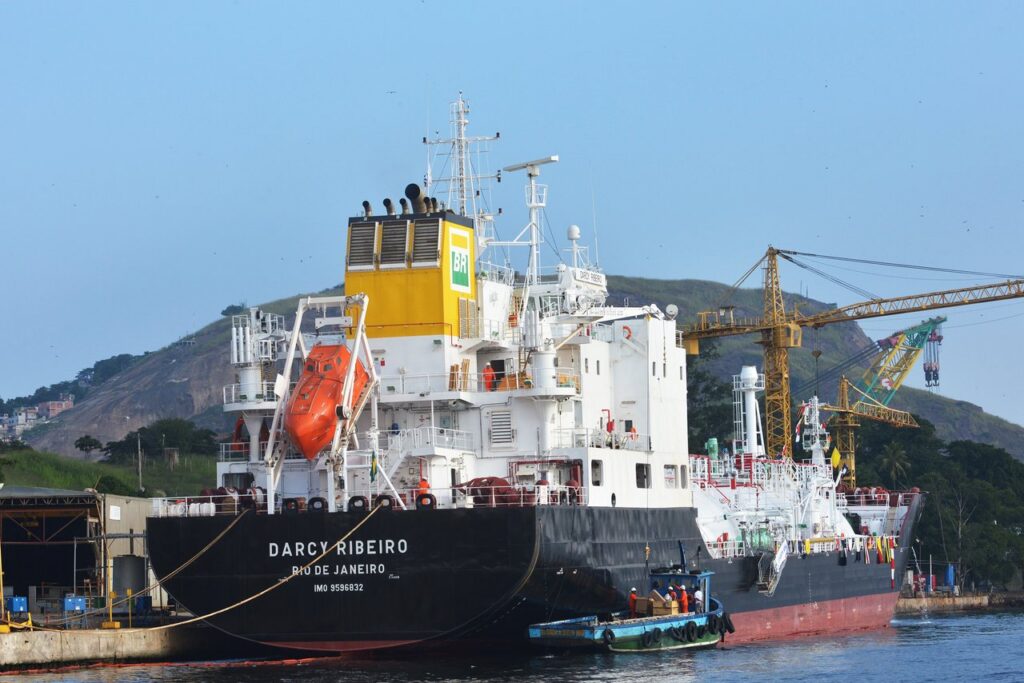
First Transpetro Vessel Test with VLSFO and Biodiesel Blend

“The field test reflected a major collaborative effort involving Petrobras' Research Development and Innovation Center, multiple Petrobras business areas, and Transpetro - Petrobras Transporte S.A. By developing a new generation of bunker fuels with renewable content – delivering lower greenhouse gas emissions – we are demonstrating our concrete commitment to a just energy transition and a lower-carbon future.”

Petrobras is a Brazilian state-controlled multinational corporation operating in the energy sector, primarily specializing in deepwater and ultra-deepwater oil and gas extraction.

Headquarters: Rio de Janeiro, Brazil

Founded: 1953

URL: petrobras.com.br

Want to explore more?

Discover how companies are advancing climate solutions across the oil and gas industry.

Related case studies

ExxonMobil starts up second Louisiana CCS operation

ExxonMobil has begun transporting and storing captured CO₂ at its Gillis, Louisiana project, its second active commercial CCS operation in the state. The project is expected to remove up to 1.2 Mt of CO₂ per year, with the company’s two Louisiana projects together accounting for up to 3.2 Mt/year of contracted CO₂.

How Aramco created commercial value utilizing novel approaches to carbon accounting

Aramco has demonstrated how robust carbon accounting and verified carbon credits can be integrated into physical energy transactions. Its first commercial sale of a verified carbon-offset crude cargo shows how credible carbon intensity methodologies could support greater transparency and commercial differentiation.

How Norway’s 1971 petroleum principles shaped Equinor’s low-emission production on the Norwegian continental shelf 

Norway’s long-standing approach to limiting gas flaring has helped establish a framework focused on resource utilisation and lower-emission production. Equinor’s experience demonstrates how minimizing flaring and maximizing resource utilization have contributed to effective methane management and the efficient use of energy.