OGCI’s 12 members have already significantly reduced their own methane emissions and are sharing what they’ve learned throughout the industry to accelerate action and scale impact.
63
%since 2017
0.12
%well below 0.20% target
72
%since 2018
OGCI’s 12 member companies are sharing detection and abatement insights and providing technical support across the industry through the Oil & Gas Decarbonization Charter and OGCI’s Satellite Monitoring Campaign. OGCI also works with leading international organizations including the UN’s Environment Programme, the World Bank, and Environmental Defense Fund to drive further action to reduce methane emissions.
Deploying satellites, aerial surveys and ground sensors to detect and measure methane emissions across operated oil and gas assets.
Curated industry-wide resources, case studies, tools and publications to enable operators to reduce their methane emissions.
OGCI members work together and through the Oil & Gas Decarbonization Charter and other initiatives, to accelerate and scale industry-wide abatement of methane emissions.
OGCI set and achieved its ambition to reduce methane intensity to well below 0.20%, demonstrating what’s possible. The ambition has been widely adopted, including by the UN’s Oil & Gas Methane Partnership 2.0 and the OGDC.
OGCI successfully demonstrated the use of satellite data to aid methane mitigation and has scaled its campaign to more countries and assets.
See how OGCI’s members abated methane emissions and flaring at their operated assets.
OGCI’s resources to help companies reduce their methane emissions include reports, tools and a step-by-step playbook on using a satellite methane detection to drive abatement.
Read our explainer articles to understand different approaches for operators to measure, monitor and abate their methane emissions.
OGCI’s methane library is a centralized repository of over 200 key resources focused on helping oil and gas companies accelerate methane emissions reductions.


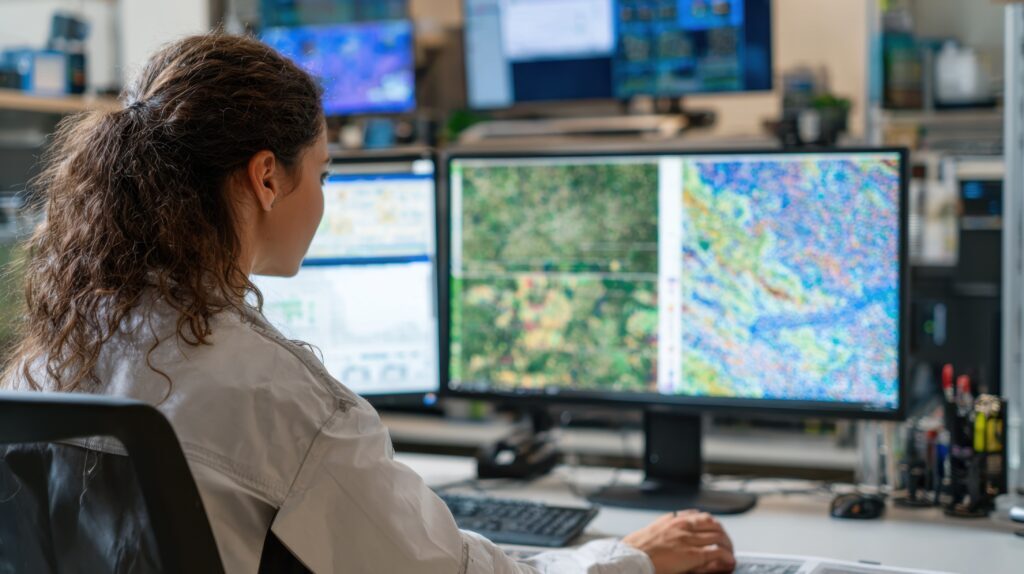
Learn more about reducing methane emissions in oil & gas.
Abating methane emissions is one of the fastest ways to slow global warming in the near term.
Methane is a powerful greenhouse gas that traps more heat than carbon dioxide over a 20-year period. Because it remains in the atmosphere for a shorter time, cutting methane emissions can deliver climate benefits relatively quickly.
The oil and gas sector plays an important role in this effort. Methane emissions from oil and gas operations can often be reduced through improved monitoring, better maintenance and the use of existing technologies that detect and address leaks.
By abating methane emissions today, the industry can deliver meaningful near-term climate impact while supporting the long-term transition to a lower-carbon energy system. This is why methane reduction is a central focus for the Oil and Gas Climate Initiative (OGCI), which works with its member companies to accelerate the deployment of methane detection, monitoring and mitigation activities across the sector.
Methane emissions in oil and gas operations typically come from a number of identifiable sources across production, processing and transport activities.
Some of the most common sources include:
These emissions can occur across upstream facilities including well sites, processing plants and transportation infrastructure.
Identifying where emissions occur is the first step toward reducing them. Through improved monitoring, maintenance and equipment upgrades, operators can significantly reduce methane emissions across their operations.
Abating methane emissions typically requires a combination of better measurement, faster detection and effective mitigation.
Some of the most effective actions include:
When detection technologies are combined with rapid response and durable equipment upgrades, companies can significantly reduce methane emissions across oil and gas operations.
Methane emissions from the oil and gas sector represent a significant share of global human-caused methane emissions.
According to the International Energy Agency (IEA), total human-caused methane emissions are around 350 million tonnes per year, with roughly 120 million tonnes coming from the fossil fuel sector, mainly oil, gas and coal.
Tracking progress requires measuring both total emissions and methane intensity, which reflects emissions relative to the amount of energy produced.
OGCI member companies report their aggregated methane performance annually. In 2024, their aggregate upstream operated methane intensity was 0.12%, reflecting sustained reductions since 2017 and demonstrating that significant progress is possible through improved monitoring, operational practices and equipment upgrades.
Methane is colourless and odourless, which makes it difficult to detect without specialized technology.
Today, methane monitoring relies on a combination of different detection tools, each designed to identify emissions at different scales.
These include:
Using multiple technologies together allows companies to detect methane emissions more quickly, investigate potential sources and improve the accuracy of methane measurement across oil and gas operations.
Satellite monitoring is increasingly used to identify large methane emission events. When a satellite detection occurs, operators can follow a structured process to investigate the source and address any emissions.
To support this, OGCI has developed a Satellite Methane Detection Response Playbook, which provides practical guidance for responding to satellite notifications.
The playbook outlines a six-step framework for operators:
Satellite detections provide an opportunity for operators to strengthen methane management by combining new monitoring technologies with systematic investigation and operational improvements.
More detailed guidance and real-world case studies are available in the OGCI Satellite Methane Detection Response Playbook.
The Oil and Gas Climate Initiative (OGCI) is a CEO-led initiative comprised of 12 of the world’s leading energy companies committed to accelerating action to a net zero future. Abating methane emissions is a core priority for OGCI and its member companies.
OGCI members have set an ambition to achieve near-zero methane emissions by 2030 and are implementing a wide range of methane reduction initiatives across their operations.
OGCI also supports industry progress by developing practical tools, sharing knowledge and encouraging collaboration. Key initiatives include:
These initiatives help support transparency, innovation and the sharing of solutions across the industry.
OGCI member companies have made significant progress in reducing methane emissions across their upstream operations.
Since 2017, members have significantly reduced upstream operated methane emissions while continuing to improve monitoring and reporting. In 2024, OGCI members reported an upstream methane intensity of 0.12%, well below their collective target of 0.20%.
This progress reflects sustained investment in methane detection technologies, equipment upgrades, improved operational practices and stronger leak detection and repair programmes.
While important progress has been made, OGCI members continue working toward further reductions in line with their ambition of near-zero methane emissions by 2030.
Upstream methane intensity is a metric used in the oil and gas industry to measure how much methane is emitted relative to the amount of energy produced during the upstream phase, which includes exploration and production. It’s an important metric as it reveals efficiency, not just scale.
In 2018, OGCI’s members set an ambition to significantly reduce their collective methane intensity as part of their strategy to achieve near-zero methane emissions and eliminate routine flaring by 2030.
For the last four years, OGCI members’ collective aggregated upstream operated methane intensity has met OGCI’s ambition of “well below 0.20%” and has improved year-on-year.
In 2024, OGCI members’ aggregate methane intensity was 0.12%, significantly lower than the global industry average. The reduction in methane intensity has translated into a 63% decrease in absolute upstream methane emissions since 2017.
In 2024, OGCI member companies’ total upstream operated methane emissions were 0.73 million tonnes.
OGCI’s methane intensity indicator measures the volume of methane emissions from member companies’ upstream operated oil and gas as a percentage of the volume of the total gas marketed.
OGCI’s methane intensity ambition underpins the Aiming for Zero Methane Emissions Initiative, and OGDC’s near zero upstream methane ambition by 2030. It is also widely used across industry and in legislation as a standard of best practice.
Reducing methane emissions is a shared challenge that requires collaboration across the energy industry.
Oil and gas companies are working together through initiatives such as:
Through these collaborations, companies share data, technologies and operational learnings to accelerate methane reductions across the sector.
OGCI supports improved methane management by promoting data transparency, shared learning and practical tools that help companies strengthen monitoring and reporting.
Key initiatives include:
By combining improved measurement, collaboration and practical resources, OGCI helps support continuous improvement in methane performance across the oil and gas industry.