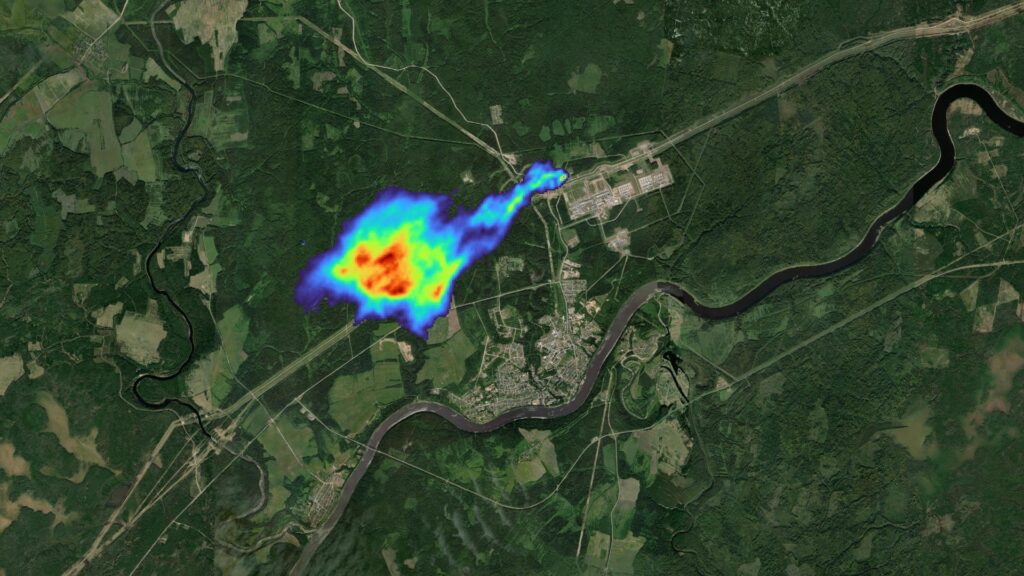
Monitoring methane emissions from space
Methane gas is invisible. So an important step toward mitigating methane emissions is detecting and measuring them.
OGCI’s SMC, conducted in partnership with satellite providers and to date with GHGSat, has helped raise awareness about the benefits of using satellites as part of a strategy to reduce methane emissions, while helping oil and gas companies detect and monitor their methane emissions through peer-to-peer engagement.
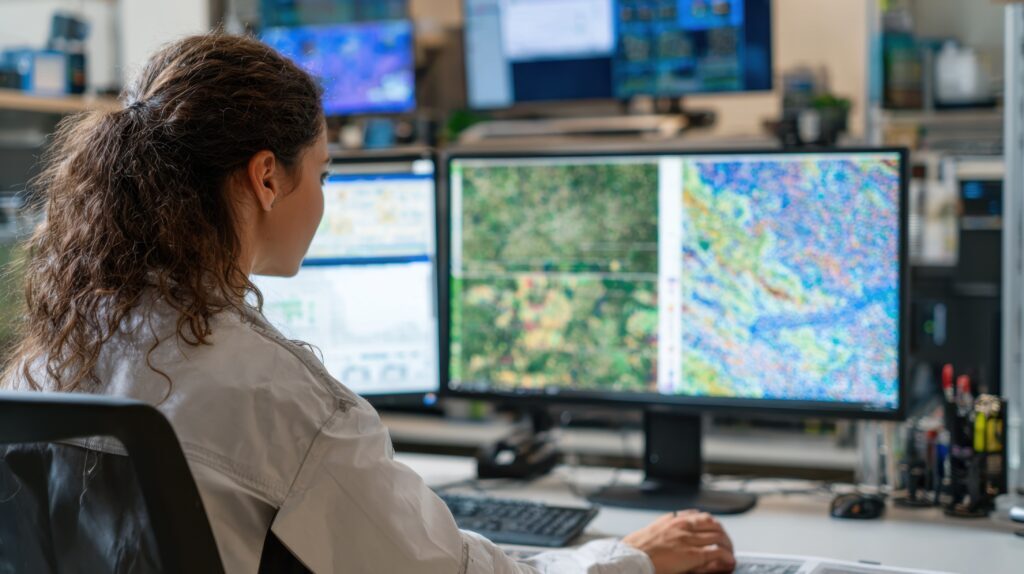
The satellites are used to detect and monitor large methane emissions events. Unlike some other public satellite monitoring, OGCI’s SMC uses high-resolution imagery and is looking at specific facilities so is more likely to detect a large event than other satellites which pass over a very large area.
Also unique to OGCI’s SMC is the confidential engagement on a peer-to-peer level with local operators to help them reduce the methane emissions detected.
OGCI’s campaign uses the data to help local operators identify emissions sources, and OGCI member companies to share knowledge on potential solutions to support the operators’ work to abate the emissions.
OGCI’s Satellite Monitoring Campaign
In 2021, OGCI launched its Satellite Monitoring Campaign (SMC) with a pilot project monitoring six sites in Iraq to demonstrate the use of satellite monitoring as part of a program to reduce methane emissions.
OGCI partnered with GHGSat, a Climate Investment portfolio company which operates satellites and provides readings of the facilities, and Carbon Limits to help with local operator engagement and on-site assessment.
Once the campaign identified significant methane plumes, we worked with Carbon Limits to engage with local operators, providing the operators with the data and working with them to help fix leaks, upgrade processes and find ways to use, rather than vent, natural gas.
The Iraq pilot showed significant potential. It was able to help local operators quickly address methane plumes equivalent to an estimated 1 Mt of CO2e over the course of one year.
Following the success of the Iraq pilot project, OGCI scaled up the campaign to monitor more countries and assets.
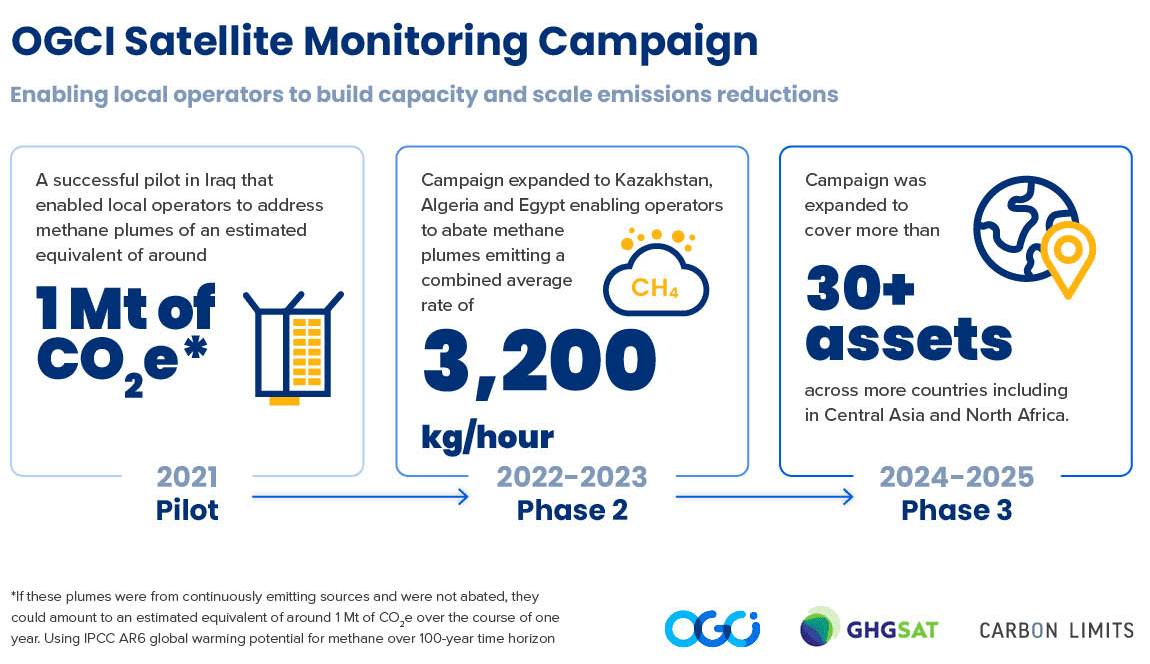
In 2024, OGCI extended the campaign to more countries and operators more than doubling the number of assets and countries involved, including countries in Central Asia, North Africa and South America.
In 2025, OGCI published a step-by-step guide to help oil and gas operators respond rapidly and effectively to methane emissions detected from space.
The Satellite Methane Detection Response Playbook helps equip operators across the global oil and gas industry with the knowledge and tools needed to rapidly reduce methane emissions.
OGCI member companies developed the playbook with support from emission data platform provider Aerscape. It combines industry expertise, practical field experience and lessons from OGCI’s decade of work to reduce methane emissions.