Establishing a framework for zero flaring
In 1971, as Norway was establishing its petroleum industry, the Parliament adopted 10 guiding principles to ensure that resources on the Norwegian continental shelf were developed in a way that benefited society as a whole. One of these principles was that exploitable gas could only be flared during brief testing periods.1
Making the most of valuable resources
At the time, the objective was to avoid wasting valuable natural resources, decades before climate change became a defining policy issue. Over time, this principle was complemented by requiring operators to utilize, export or re-inject associated gas and by taxing combustion and venting, Norway established a set of principles that continue to shape oil and gas production more than five decades later.

Delivering carbon-efficient production
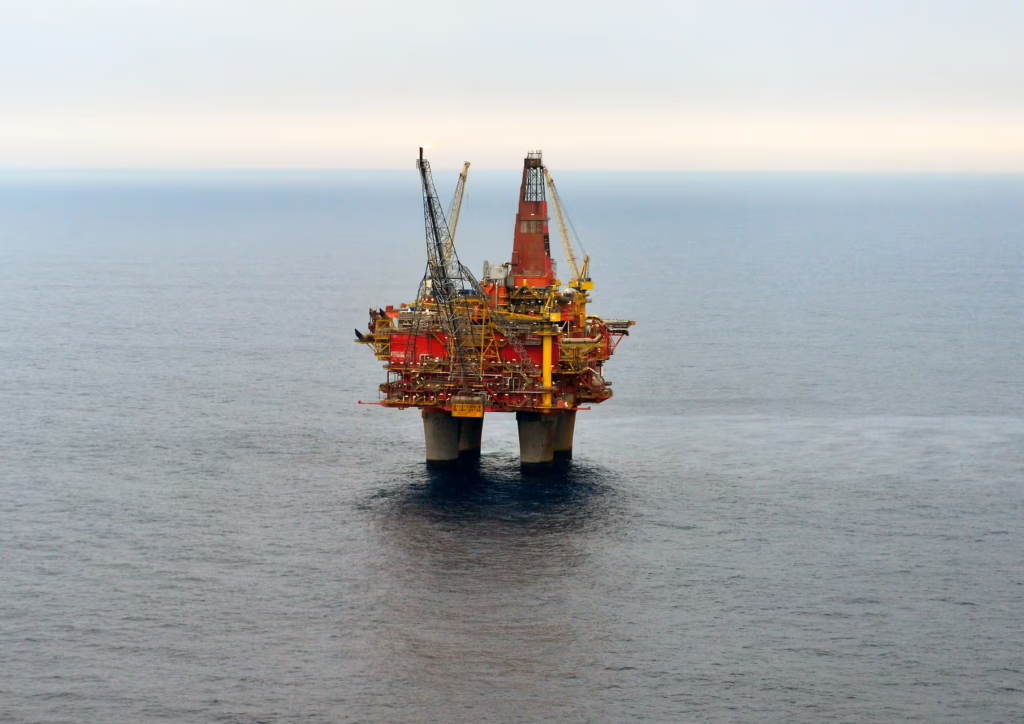
For Equinor, this legacy is reflected in its near-zero flaring and methane intensities and a strong focus on resource utilization. Combined with energy-efficiency measures, electrification and low-emission field design, these practices have contributed to carbon-efficient production over time, resulting in an upstream CO₂ intensity of 6.3 kg CO₂/boe in 2025, less than half the reported industry average.2
Sharing lessons across the industry
Decades of experience with a near-zero flaring policy framework on the Norwegian continental shelf have informed wider industry efforts to reduce emissions. Building on such experience as well as examples of best practice from other regions, OGCI has developed mitigation action plans for flaring and methane emissions to drive improvement and to support emission reductions across the industry, including among OGDC companies.
- “Flaring of exploitable gas on the Norwegian continental shelf must not be accepted except during brief periods of testing.” (Norwegian governmental white paper 1970-71.)
- Equinor 6.3 kg/boe Scope 1 operated 100% basis versus industry average of 17 kg/boe IOGP peer average in 2024.