/

CCUS

CCUS

ExxonMobil starts up second Louisiana CCS operation

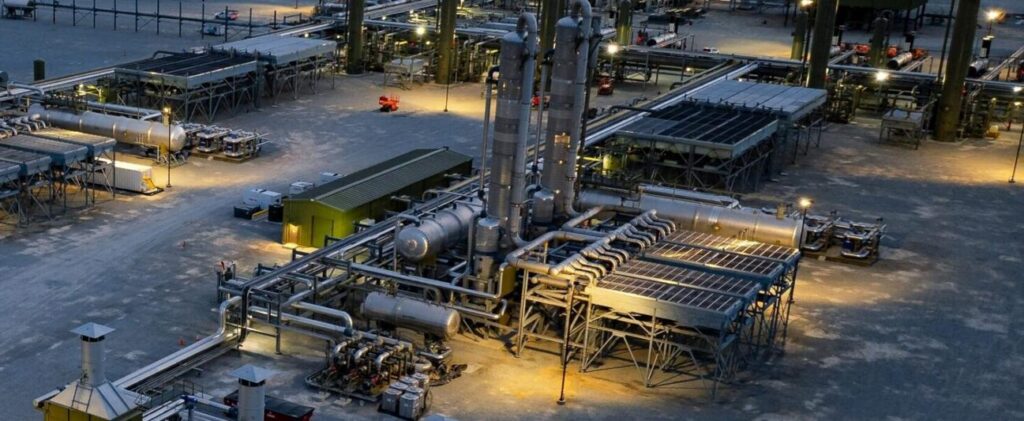
ExxonMobil has begun transporting and storing captured CO₂ at its Gillis, Louisiana project, its second active commercial CCS operation in the state. The project is expected to remove up to 1.2 Mt of CO₂ per year, with the company’s two Louisiana projects together accounting for up to 3.2 Mt/year of contracted CO₂.

expected CO₂ removal capacity of the Gillis project

0 Mt CO₂/year

total contracted CO₂ across ExxonMobil’s two active Louisiana projects

0 Mt CO₂/year

Gillis is ExxonMobil’s second active commercial CCS operation in Louisiana

0 nd
In this case study:

ExxonMobil has started transporting and storing captured CO2 to their project in Gillis, Louisiana, its second active commercial CCS operation in the state.

Capturing CO₂ before it reaches the market

The project is expected to remove up to 1.2 Mt of CO2/year from the natural gas stream before the treated gas is delivered to Gulf Coast markets, including LNG facilities.

Scaling up CCS in Louisiana

ExxonMobil says its two active Louisiana projects account for up to 3.2 Mt/year of contracted CO2, with
additional CCS projects planned for 2026.

“Carbon capture projects are essential to meeting society’s emission-reduction goals. These technologies offer one of the most practical, scalable pathways available today, and ExxonMobil has more than 40 years of experience in carbon capture with the ability to deliver results at global scale.”

ExxonMobil is one of the world’s largest publicly traded international energy companies, operating major upstream production, refining, and chemical manufacturing projects globally.

Headquarters: Spring, Texas, United States

Founded: 1999 (via merger of Exxon and Mobil, both originating in 1870)

URL: exxonmobil.com

Want to explore more?

Discover how companies are advancing climate solutions across the oil and gas industry.

Related case studies

How Aramco created commercial value utilizing novel approaches to carbon accounting

Aramco has demonstrated how robust carbon accounting and verified carbon credits can be integrated into physical energy transactions. Its first commercial sale of a verified carbon-offset crude cargo shows how credible carbon intensity methodologies could support greater transparency and commercial differentiation.

How Norway’s 1971 petroleum principles shaped Equinor’s low-emission production on the Norwegian continental shelf 

Norway’s long-standing approach to limiting gas flaring has helped establish a framework focused on resource utilisation and lower-emission production. Equinor’s experience demonstrates how minimizing flaring and maximizing resource utilization have contributed to effective methane management and the efficient use of energy.
Aramco logo

Aramco’s Use of Agentic AI and energy efficiency tools reduces emissions

Aramco is using agentic AI, digital technologies and targeted energy-efficiency measures to improve operational performance and reduce emissions. In 2025, its initiatives delivered approximately 3,192 MMBtu/hr in energy savings and avoided 1.57 MtCO₂e.