
/

Transport

Transport

Repsol invests in advanced biofuels

Repsol is scaling renewable fuel production with its new Puertollano facility, transforming existing infrastructure to produce 100% renewable diesel from agricultural and food waste. The project demonstrates the potential of low-carbon technology at scale while helping customers reduce their carbon footprint without modifying their vehicles.

renewable diesel production per year

0 tonnes

CO2  emissions avoided per year

0 tonnes

Offering renewable fuels

0 service stations
In this case study:

Scaling renewable fuels production

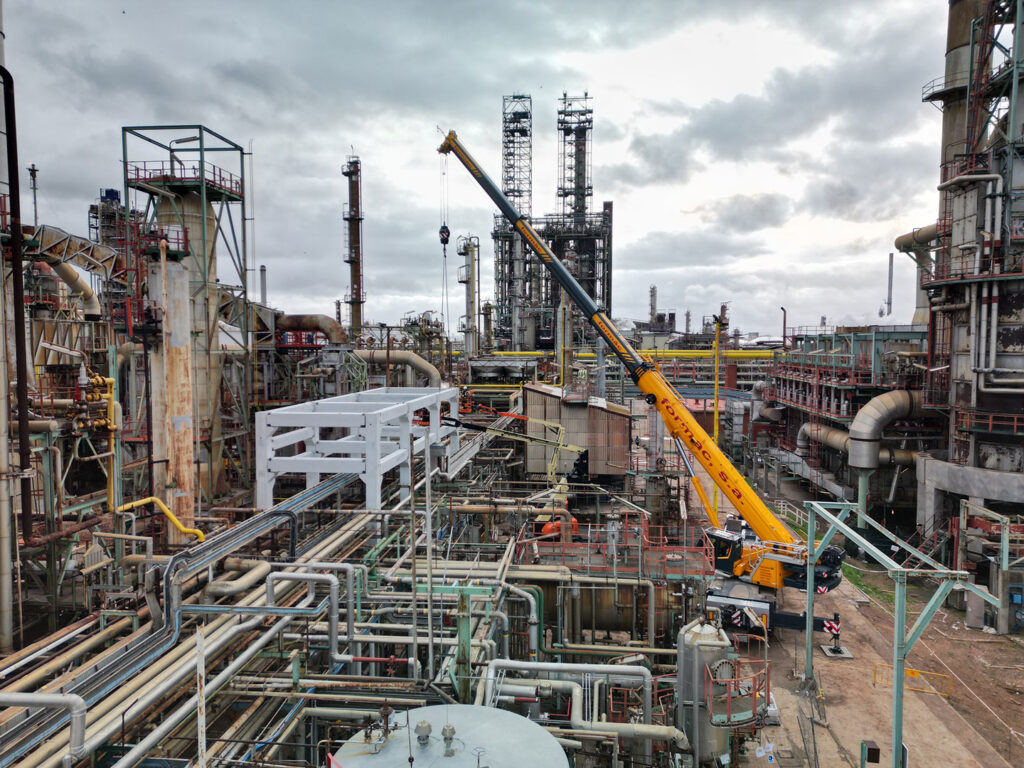
In 2026, Repsol continued to scale its production of renewable fuels with the start of operations at its Puertollano Industrial Complex, where it transformed an existing unit to produce 100% renewable diesel.

Puertollano: transforming existing infrastructure

The new facility, which previously processed fossil-based raw materials, has the capacity to produce 200,000 tons per year of Repsol’s 100% renewable Nexa Diesel from agricultural and food waste. It’s expected to avoid approximately 700,000 tons of CO2 emissions per year, compared to conventional fuels, and taking into account the product’s entire lifecycle.

Repsol invested €130 million in the Puertollano transformation project and an additional €16 million to enable the use of renewable hydrogen at the facility, replacing natural gas with biogas to further reduce emissions.

Demonstrating low-carbon technology at scale

This is Repsol’s second large-scale renewable fuels project, demonstrating the real-world potential for low-carbon technology. Repsol opened its first facility at its Cartagena plant in 2024, capable of producing 250,000 tons of renewable fuels per year.

Renewable fuels for existing vehicles

Repsol’s renewable fuels can be used in current engines and are already available at 1,600 of the company’s service stations, enabling its customers to reduce their carbon footprint without the need for modifications to vehicles or the distribution network.

"The transformation of our Puertollano unit to produce renewable fuels reflects Repsol’s commitment to low-carbon technology as a key lever to ensure a just energy transition. Renewable fuels provide an immediate and effective path to enable our industry and society to reduce emissions in an efficient and cost-effective way, using existing infrastructure and the vehicles people already have. This project is an example of the need for a technology-neutral approach that considers all solutions equally to provide energy that is secure, affordable and sustainable."

Repsol is a global multi-energy provider based in Spain, active in upstream oil and gas production, refining, commercial fuel distribution, and renewable electricity generation.

Headquarters: Madrid, Spain

Founded: 1987

URL: repsol.com

Want to explore more?

Discover how companies are advancing climate solutions across the oil and gas industry.

Related case studies

ExxonMobil starts up second Louisiana CCS operation

ExxonMobil has begun transporting and storing captured CO₂ at its Gillis, Louisiana project, its second active commercial CCS operation in the state. The project is expected to remove up to 1.2 Mt of CO₂ per year, with the company’s two Louisiana projects together accounting for up to 3.2 Mt/year of contracted CO₂.

How Aramco created commercial value utilizing novel approaches to carbon accounting

Aramco has demonstrated how robust carbon accounting and verified carbon credits can be integrated into physical energy transactions. Its first commercial sale of a verified carbon-offset crude cargo shows how credible carbon intensity methodologies could support greater transparency and commercial differentiation.

How Norway’s 1971 petroleum principles shaped Equinor’s low-emission production on the Norwegian continental shelf 

Norway’s long-standing approach to limiting gas flaring has helped establish a framework focused on resource utilisation and lower-emission production. Equinor’s experience demonstrates how minimizing flaring and maximizing resource utilization have contributed to effective methane management and the efficient use of energy.