The reduction in carbon intensity corresponds to a 25% reduction in OGCI members’ aggregate upstream operated GHG emissions (Scope 1 and 2) in 2024 compared with 2017.
The ambition covers both carbon dioxide and methane emissions from operated oil and gas exploration and production activities, as well as emissions from associated imports of electricity and steam.2
Upstream carbon intensity is down 24% since 2017
(kilograms of CO2e per boe)
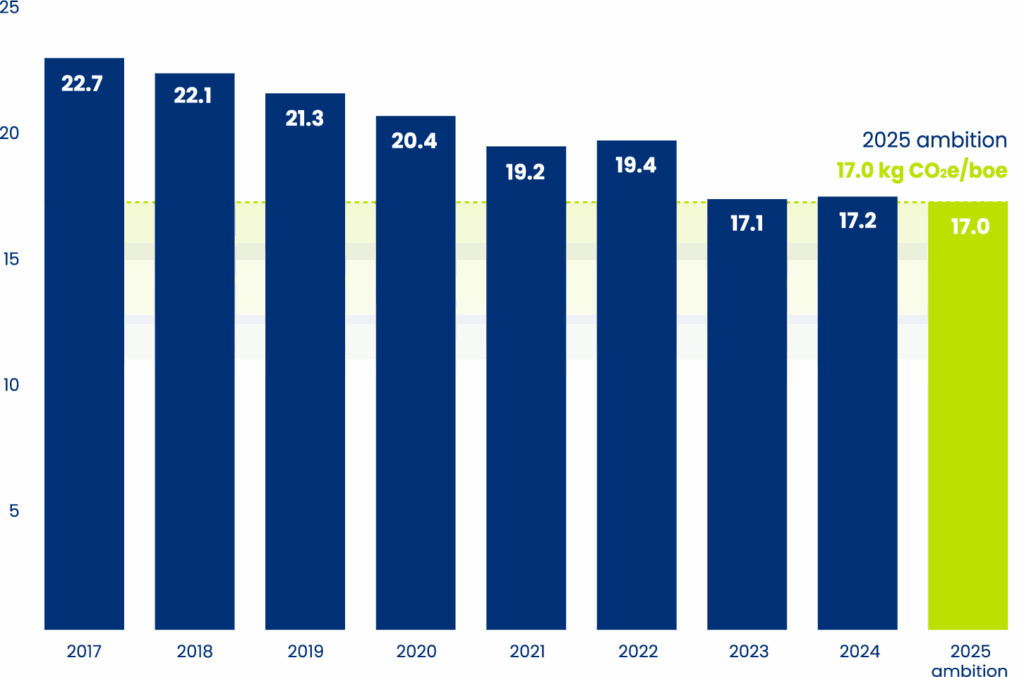
Percentages are rounded. 2023 was 17.07% with six companies reporting, 2024 was 17.17% with 10 companies reporting. This indicator has been calculated with a mixed approach combining market-based and location-based methodologies with market-based priority from 2017 to 2021, and calculated using a market-based only approach from 2022. 2022 and 2023 data restated. See Chapter 4 Performance Data.
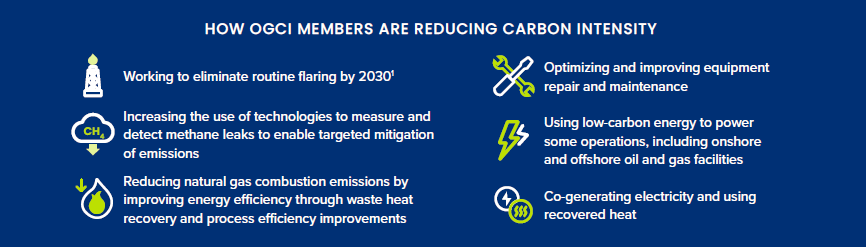
Reducing upstream carbon intensity involves improving energy efficiency, electrification of operations using renewable power where possible, co-generating electricity and useful heat, eliminating routine flaring by 2030, and achieving near zero methane emissions. Changes in companies’ asset portfolios also impact intensity.
See case studies here from our members Aramco, bp and Equinor.

1 See OGCI’s latest Performance Data here. The data is independently verified and assured by EY.
2 See OGCI’s 2025 Reporting Framework p.15-18 for methodology of OGCI’s carbon intensity indicator.