
Measurement informed inventories: First steps on a long journey

This resource discusses the evolving landscape of greenhouse gas inventories and introduces the concept of “measurement-informed inventories” (MIIs). MIIs incorporate real measurement data to provide a more accurate picture of methane emissions. The seminar examines various methodologies for generating MIIs, including differences in how measurement data is reconciled with top-down data and the specific purpose […]
IMEO methane data

Global satellite detection and notification system. IMEO is assembling a public database of empirically verified methane emissions data and connecting it to the individuals who can act to reduce emissions. The data is derived from satellites and global scientific measurement campaigns, and in the future will draw from emissions reported by companies under the Oil […]
Best practice guidance for effective methane management in oil and gas
UNECE Monitoring, Reporting, and Verification (MRV) and Mitigation best practice guidance. The document offers recommendations for developing and implementing effective methane quantification, monitoring, reporting, and verification (MRV) practices within the oil and gas sector. It serves as a comprehensive resource for a wide range of stakeholders, including facility owners, operators, and policymakers at all levels […]
Methane venting from uncontrolled production storage tanks at conventional oil wells: Temporal variability, root causes, and implications for measurement

Emissions from uncontrolled oil production storage tanks are poorly understood and characterized. This study reports and analyzes directly measured, temporally varying methane emission rates, total gas vent rates, and vent gas methane fractions from storage tanks at eight active upstream oil production sites in Alberta, Canada. Detailed statistical analyses were completed to suggest minimum sampling […]
Methane exhaust measurements at US gathering compressor stations

This study measured methane emissions from internal combustion engines used in natural gas compression at U.S. gathering and boosting stations. Researchers sampled 133 engines from 67 facilities across 11 states. Using a in-stack tracer gas method, they estimated combustion slip (methane that escapes during the combustion process) under normal conditions. The data was then used […]
Where the methane is – insights from novel airborne LiDAR measurements combined with ground survey data
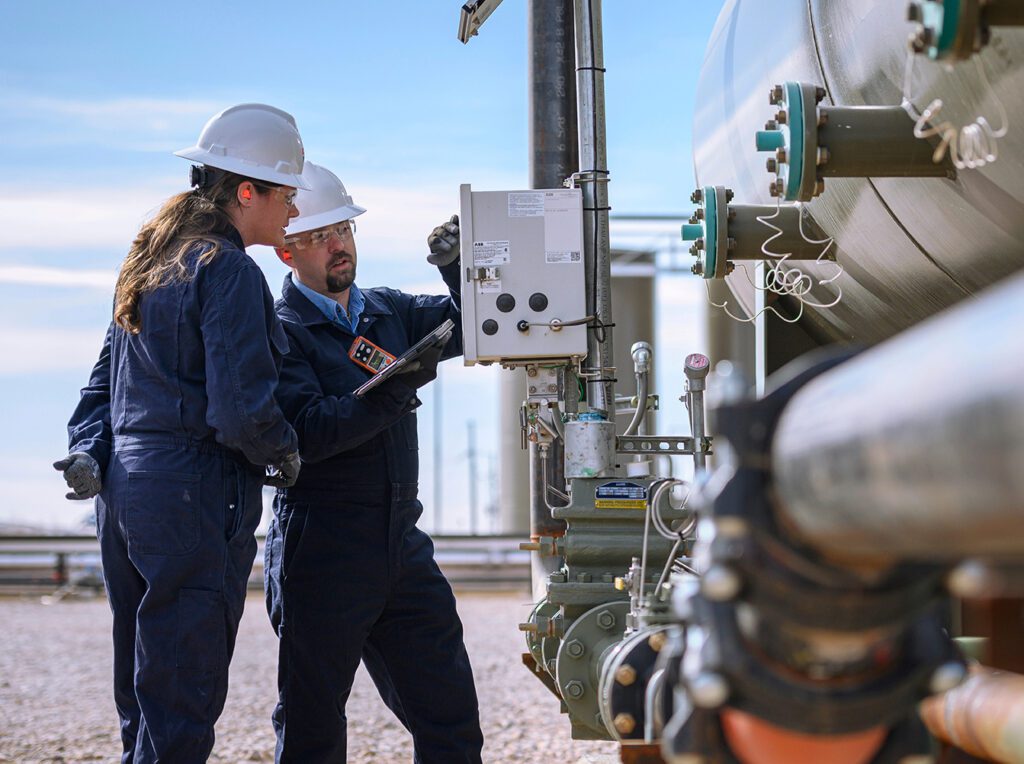
This study combines airborne LiDAR measurements, parallel controlled releases, and on-site optical gas imaging (OGI) survey and pneumatic device count data to derive a new measurement-based methane inventory for oil and gas facilities in British Columbia, Canada. Results reveal a surprising distinction between the higher magnitudes, different types, and smaller number of sources seen by […]
Methane Emissions Accounting: How Interpretations of Standards Drive Divergent Results
A webinar hosted by META which provides details on constructing a measurement informed inventory.
Introduction to Uncertainty in Methane Emissions – Part 1: What is Uncertainty and why is it important?

An introduction to the concept of uncertainty in methane emissions
Introduction to Uncertainty in Methane Emissions – Part 2: What are the sources of uncertainty and how to reduce them?

A video overview of the sources of uncertainty in measuring methane emissions
Creating measurement-based oil and gas sector methane inventories using source-resolved aerial surveys
An overview of a reconciling source and site-level measurements from upstream facilities in Canada.