Why it’s important
Methane is a more potent greenhouse gas than carbon dioxide, especially in the first decades after its release into the atmosphere. But it’s much shorter lived, so it stays in the atmosphere for less time than carbon dioxide.1
This is why rapid and sustained reductions in methane emissions provide an opportunity to limit near-term global warming and contribute to progress towards the Paris Agreement goals.
According to the International Energy Agency’s (IEA) Global Methane Tracker 2025, the concentration of methane in the atmosphere from all human activities is already more than double pre-industrial levels. It now accounts for around 30% of the global warming the world is currently experiencing.
The oil and gas sector accounts for around 23% of all methane emissions attributable to human activity.2 Other sources of methane emissions include coal, bioenergy, agriculture and landfills.
Common sources of methane emissions from oil and gas operations include flaring, venting, fugitives, gathering pipeline emissions and pneumatic devices.
SOME COMMON SOURCES OF METHANE EMISSIONS

Flaring

Venting

Fugitives

Gathering pipeline emissions

Pneumatic devices
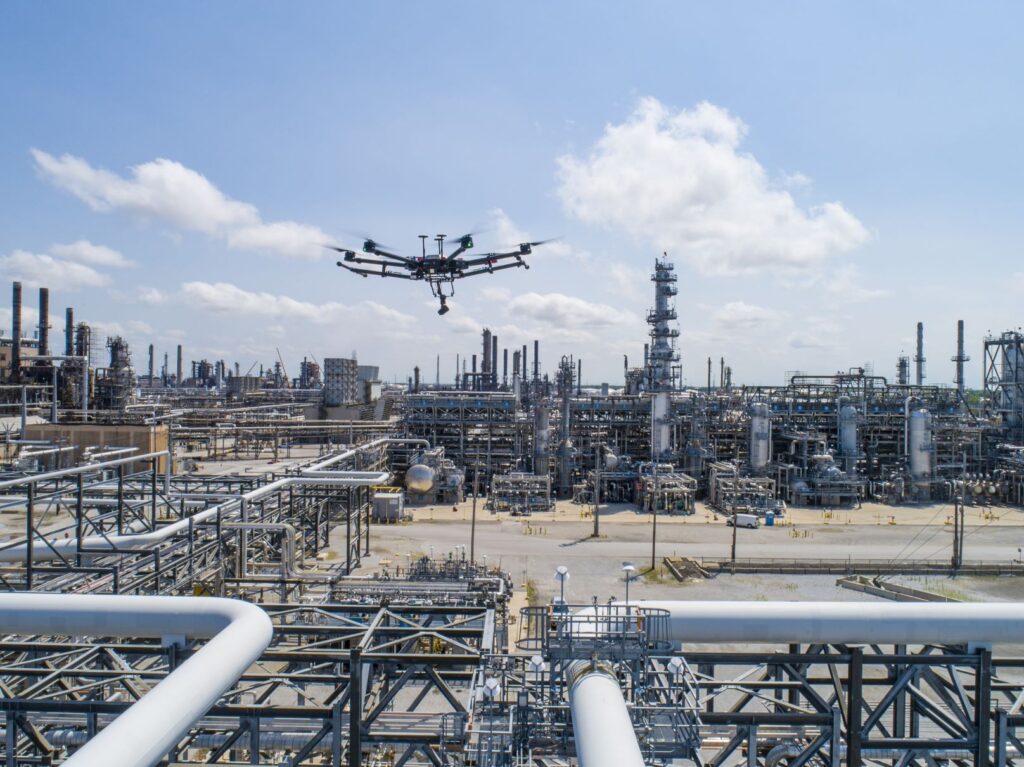
Thanks to a scale up of technologies that help detect, monitor and stop leaks over the past decade and by avoiding non-emergency flaring and venting, methane emissions in the oil and gas industry can now be abated in many locations at relatively low or minimal cost. OGCI member companies’ success in abating upstream methane emissions has demonstrated that meaningful and cost-effective opportunities exist to support rapid reductions in methane emissions in the oil and gas industry.
The reach of OGCI’s upstream operated methane emissions ambition (defined as methane intensity of below 0.20%) continues to grow. OGCI’s methane intensity ambition is now widely used across industry and in legislation as a standard of best practice for methane abatement.
It also underpins OGDC’s near-zero upstream methane emissions ambition.3
OGCI is working on multiple fronts, including through the Oil & Gas Decarbonization Charter, to help the industry identify short- and long-term measures that will help deliver sector-wide abatement of methane emissions.
1 IPCC, using GWP of AR 5. Global-Warming-Potential-Values (August 2024).pdf
2 www.iea.org/reports/global-methane-tracker-2025/key-findings