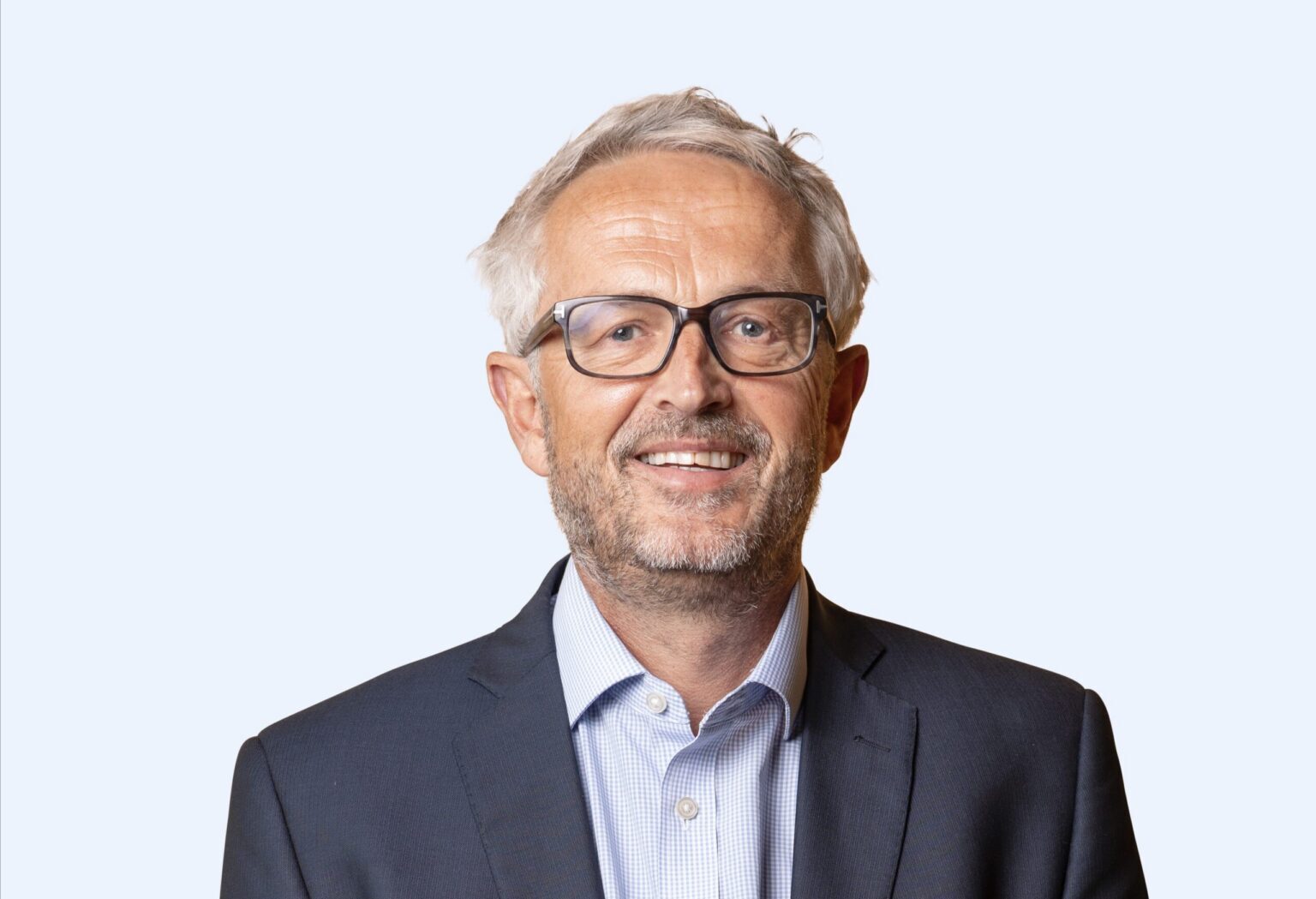
Mr Sverdrup gave this speech on May 4, 2026 at the International High-Level Multi-Stakeholder Event on Methane Action, organized by France, holder of the 2026 G7 Presidency.)
Your Excellencies, Honorable Ministers, distinguished leaders from industry and international organizations, ladies and gentlemen thank you for inviting me. We are grateful for the French Presidency of the G7 to maintain methane as a critical agenda item in the global energy landscape, even in the current context.
Today, I want to share a simple but powerful message: companies have proven it is possible to significantly reduce methane emissions from oil and gas production. By building on industry-led efforts and partnerships already in place, we can do even more. This is a call for action, and for collaboration.
Reducing methane leaks from oil and gas must be a top priority.
Today, oil and gas supply around half of global primary energy. Many credible outlooks suggest this will remain significant for some time, including in scenarios compatible with the Paris Agreement goals. This makes it essential to keep operations safe, efficient, and environmentally responsible, reducing energy waste and minimizing the footprint.
The methane agenda sits at the intersection of safety, efficiency, climate action and economic value. Done right, methane action strengthens energy security by reducing waste, improves affordability, and access, by bringing more gas to market and is good business.
The 12 members of OGCI have shown what can be achieved in little time.
OGCI, launched at the UN Climate Summit in 2014, is a CEO-led collaboration among 12 of the world’s largest oil and gas private and state-owned companies to reduce emissions and accelerate climate action.
From the start, methane was our priority: understanding the sources, developing and deploying technologies to detect and mitigate, and creating systems to measure and report. A decade ago, we had none of this. Today, we deliver on all of it.
Since 2017, OGCI members have reduced their upstream methane emissions by more than 60%. This improvement alone is equivalent to slashing 100 million tonnes of CO2 emissions, comparable to making Denmark and Sweden net zero.
In 2024, the aggregated upstream methane intensity was 0.12 percent, well below the ambition of 0.20% we set in 2018, which has become the international benchmark. Technology, shared ambitions, collaboration, and leadership have driven this progress.
This leadership continues. When the CEOs of OGCI recently met in Houston, in the middle of the current energy crisis, they reaffirmed their commitment to methane reduction.
Their message is: We are staying the course. The CEOs reiterated that, much like the mindset used in industry safety or on oil spills, all upstream methane emissions can and should be avoided. The new ambition set is to reach 0.1% methane intensity by 2030.
While OGCI’s progress is impressive, it’s just a beginning. The real challenge lies now beyond OGCI’s members, where over 90% of global upstream methane emissions occur. The largest opportunities lie in methane-intensive regions, often in emerging economies.
National oil companies are critical to this effort. Meaningful progress requires collaborating with them, not finger-pointing or bypassing them. We must invite them in, offer a helping hand, and share best practices.
That’s why OGCI accepted the COP invitation to lead the industry through the Oil & Gas Decarbonization Charter (OGDC), a platform recognized by IEA, UNEP and the Environmental Defense Fund as critical and important in their latest Pledges to Progress report.
Launched at COP28 under the leadership of the UAE, ADNOC, and OGCI, OGDC has become a global, action-oriented platform. It includes 56 companies operating in over 100 countries, with around two-thirds of signatories being national oil companies. Together, these companies produce nearly 50% of the world’s oil, a reach and scale second to none.
All signatories have accepted the challenge to aim for near-zero methane emissions and zero routine flaring by 2030. Today, the champions of OGDC are the CEOs of Aramco, ADNOC, and TotalEnergies, and the initiative is led by a Secretariat as part of OGCI.
OGDC supports companies through training, peer learning, and capacity building. We report progress and emissions annually, verified by third parties. In just two years, more than 2,000 engineers, all around the world, have been trained.
Webinars, a library of best practices, and company-to-company mentorships have been established, such as sharing drones to detect leaks. It is early days, but we have already seen a 50% increase in companies incorporating in their operations methane ambitions and developing action plans. Awareness is up, and CEOs from a range of global contexts are committed.
Technology is essential to make this happen and has been a gamechanger.
For example, OGCI’s work with partners on satellite monitoring has detected and supported local mitigation of massive methane leaks in countries like Iraq, Egypt, Algeria, and Kazakhstan.
Three of these leaks were equivalent to a full year’s emissions from a major oil and gas company. This model: detect, verify, engage, and mitigate, focuses on action and peer-to-peer engagement. We have also issued papers on what to do with problems seen from space such as our satellite methane detection response playbook.
It shows how data, engagement, and responsive operators can deliver significant improvements in a short time.
To bend the curve, we need to see more action on the ground: more detection campaigns, more replacement of equipment, and more investments.
The message is simple: industry is a powerful partner. It has established delivery platforms that work, developed proven technologies, and created a model that connects leadership with implementation.
Governments and diplomacy can play a critical role.
First, endorse and scale what works, encouraging more companies to join OGDC and similar initiatives. Second, support pragmatic initiatives and frameworks that encourage detection, actual mitigation, and reporting. Third, prioritize collaboration, especially with emerging economies, where progress often comes faster with a helping hand than with a stick. Access to capital may be an obstacle.
This is a true double dividend: methane action reduces emissions and unlocks value. It allows governments to meet their climate commitments while generating revenue that can be reinvested into growth, resilience, and energy security.
By working together, governments, industry, and national oil companies, we can achieve near-zero methane emissions from oil and gas.
Let’s act now to make it happen.
Learn more about how OGCI supports operators to reduce methane emissions here.