Improving methane emissions measurement
Since 2023, Shell has been conducting site-level surveys with the aim of reconciling site-level measurements with source inventories, identifying gaps and addressing them, for increased accuracy of reporting– across 14 operated assets.
In total, this covers more than 100 facilities. Shell became a founding signatory of the OGMP 2.0 reporting framework in 2020 and has achieved the OGMP 2.0 Gold Standard in 2023 and 2024.
Advancing OGMP 2.0 reporting
In 2024, Shell achieved the highest level of reporting methane emissions – level 5 in OGMP 2.0 – across approximately 88% of its operated assets. For 2025, Shell has calculated that this increased to approximately 92%.* It achieved this improvement by incorporating learnings from previous surveys; reconciliation; working closely with vendors to refine technology applications and survey approaches; and incorporating OGMP requirements into existing asset management systems.
*92% is based on our internal valuation and currently awaiting validation by the UN Environment Program
Using technology to detect methane emissions
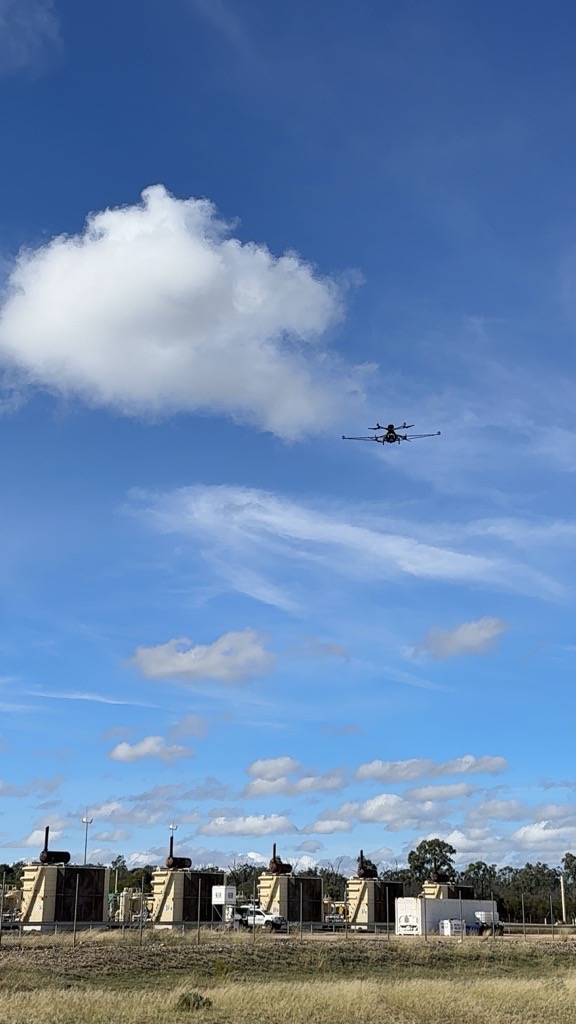
Shell conducts surveys using various technologies including:
- drones;
- aircraft;
- optical gas imaging – uses infrared cameras to detect methane;
- high flow samplers – portable devices that captures escaping gas to quantify the leak rate;
- Fourier transform infrared spectroscopy – uses infrared radiation to quantify emissions from combustion equipment;
- video imaging spectral radiometer – an infrared imaging that enables the determination of destruction efficiency of flares;
- satellites;
- and various continuous monitoring sensors.
Reducing methane emissions towards 2030
Total methane emissions from assets under Shell operational control were reduced by 78% between 2016 (138,000 tonnes) and 2025 (31,000 tonnes).