/

Methane emissions

Methane emissions

From flaring to power: innovative gas recovery

Whilst flaring can often be reduced by optimising existing operations, it sometimes requires substantial investments.

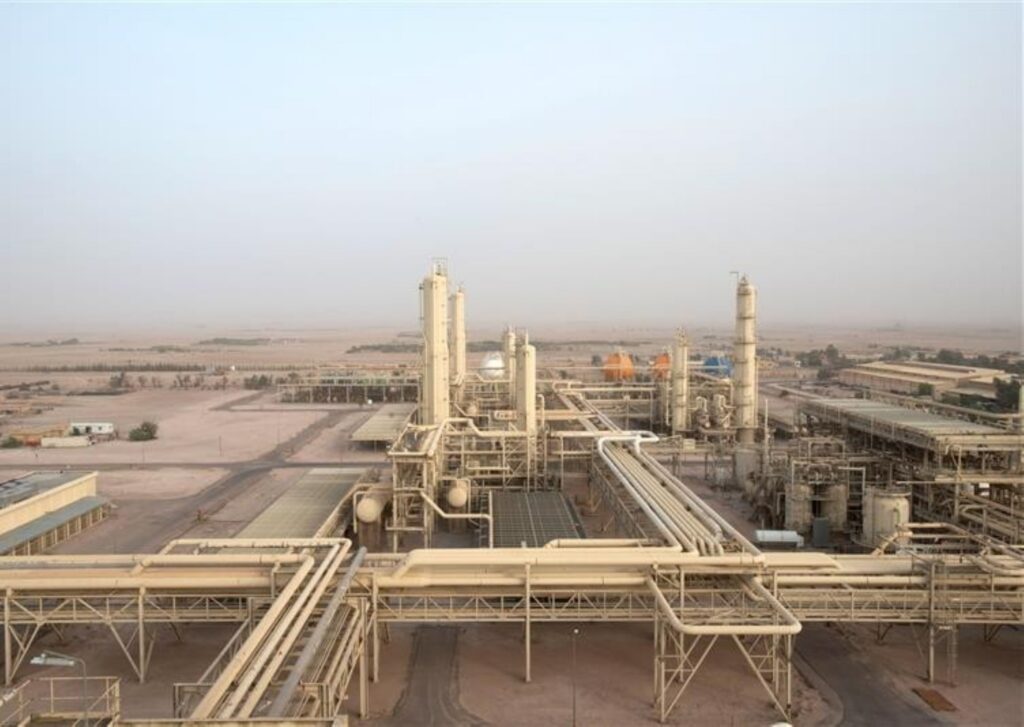
Basrah Gas Company in Iraq Credit: BGC

of electricity

0 GW

Of Iraq's LPG demand

0 %

Ramped up gas processing capacity from 250mmscf/d to 1100mmscf/d

0 mmscf/d
In this case study:

Basrah Gas Company (BGC) in Iraq exemplifies how an innovative commercial model and long-term development plans can create transformational results. Since 2013, this joint venture between Iraq’s South Gas Company, Shell and Mitsubishi, has boosted gas recovery from 250 to more than 1100 million standard cubic feet per day (end of February 2026), capturing associated gas from three major oil fields that had previously been flared.

This has enabled BGC to send gas to the grid in Iraq supporting approximately 3.5 GW of electricity generation capacity. Additionally, through the capturing of associated gas, BGC also produces LPG and condensates; BGC currently supplies 60-70% of Iraq’s LPG demand, and since 2016 increasingly exports LPG and condensates to international markets.

Shell is a global group of energy and petrochemical companies, employing around 85,000 people* across more than 70 countries. Our activities include oil and gas exploration and production, and the marketing of fuels, lubricants and chemical products. We also offer low-carbon energy products and solutions.

* At December 31, 2025, and including portfolio companies.

Headquarters: London, United Kingdom

Founded: 1907

URL: shell.com

Want to explore more?

Discover how companies are advancing climate solutions across the oil and gas industry.

Related case studies

ExxonMobil starts up second Louisiana CCS operation

ExxonMobil has begun transporting and storing captured CO₂ at its Gillis, Louisiana project, its second active commercial CCS operation in the state. The project is expected to remove up to 1.2 Mt of CO₂ per year, with the company’s two Louisiana projects together accounting for up to 3.2 Mt/year of contracted CO₂.

How Aramco created commercial value utilizing novel approaches to carbon accounting

Aramco has demonstrated how robust carbon accounting and verified carbon credits can be integrated into physical energy transactions. Its first commercial sale of a verified carbon-offset crude cargo shows how credible carbon intensity methodologies could support greater transparency and commercial differentiation.

How Norway’s 1971 petroleum principles shaped Equinor’s low-emission production on the Norwegian continental shelf 

Norway’s long-standing approach to limiting gas flaring has helped establish a framework focused on resource utilisation and lower-emission production. Equinor’s experience demonstrates how minimizing flaring and maximizing resource utilization have contributed to effective methane management and the efficient use of energy.