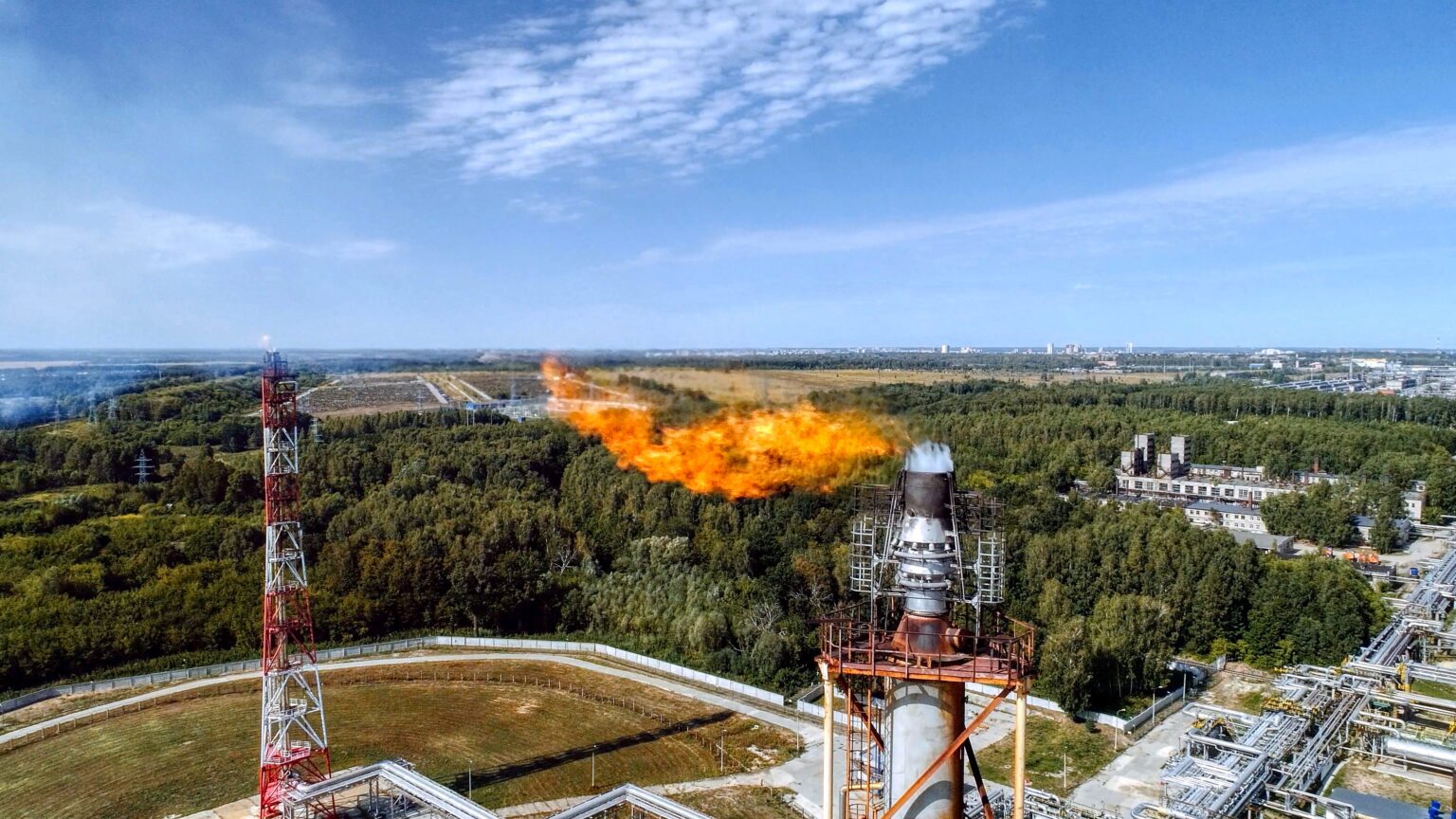
For decades, methane emissions have represented one of the most urgent but least visible challenges facing the oil and gas industry.
The science was clear, the operational case was strong, the climate benefits of rapid methane reduction were well understood. Yet too often, the industry was constrained by a practical problem: it was difficult to consistently detect and measure methane emissions.
In this new era of methane transparency, there is growing recognition that reducing emissions is equally essential as a climate imperative and to ensure energy security and affordability.
Satellites, aerial monitoring, ground-based sensors, AI and advanced data platforms are making methane emissions increasingly visible, and they can now be detected with greater speed and precision.
This is a profound shift for the oil and gas industry.
As methane emissions move from estimation to evidence, and from voluntary ambition to operational accountability, these tools can help the oil and gas industry to address the issue.
The task now is to deploy these tools at scale, build the capability to utilize them effectively, and ensure that better data leads directly to faster mitigation.
Satellite Monitoring Campaign
At OGCI, this has been central to our work for more than a decade. Our members have made progress in reducing methane emissions from operated assets, while sharing lessons and practical tools to help accelerate action across the sector.
Since 2017, OGCI members have reduced aggregate upstream operated methane emissions by 63%, aggregate upstream methane intensity by 62% and cut routine flaring by 72%.
In 2022, our members launched the Aiming for Zero Methane Emissions Initiative, calling for an all-in approach that treats methane with the same rigor as safety, sets a clear ambition of zero methane emissions, and drives the practical actions needed to make those reductions a reality.
OGCI companies have pioneered the work of collective emissions reporting and have pushed industry towards greater transparency and more ambitious methane reduction targets.
The 0.20% collective methane intensity ambition set by OGCI in 2018 has become widely adopted, including by the United Nations Environment Programme’s OGMP 2.0 and signatories of the Oil & Gas Decarbonization Charter (OGDC), as a guide for near-zero methane emissions.
Looking ahead to 2030, OGCI’s CEOs recently announced they are aiming for methane intensity of 0.1% collectively.
The next phase of progress will depend on the industry’s ability to integrate detection, monitoring, measurement and mitigation into a disciplined operating model. Detection alone is not enough: a satellite alert or sensor reading must trigger investigation, diagnosis, repair and learning.
“The value of transparency lies not just in spotting emissions, but in acting on them.”
That is the principle behind OGCI’s Satellite Monitoring Campaign. Launched in 2021 with a pilot project in Iraq, the campaign has demonstrated how high-resolution satellite data can help identify large methane emissions events at oil and gas assets, and how confidential peer-to-peer engagement with local operators can support practical action on the ground.
OGCI has since scaled the campaign to more countries and assets, including in Central Asia, North Africa and South America.
The Iraq pilot demonstrated the potential of this model: the campaign helped enable local operators to address methane plumes equivalent to an estimated 1 Mt of CO2e over the course of one year.
OGCI’s satellite monitoring is also offered to OGDC signatories. Representing around 40% of global oil production, OGDC’s 56 signatories, two-thirds of which are national oil companies, aim to achieve near-zero upstream methane and zero routine flaring by 2030.
Through strong OGCI member company leadership, the campaign’s learnings are being scaled to a diverse set of operators across different geographies, catalyzing broader sector adoption and accelerating industry decarbonization efforts.
The campaign has further demonstrated that satellite data is a powerful tool when it is combined with operational expertise, trusted engagement and a practical pathway to abatement.
This is why OGCI developed its Satellite Methane Detection Response Playbook. Published to help operators respond effectively to methane emissions detected from space, the playbook sets out a structured six-step framework from initial satellite notification to on-the-ground investigation, repair and ongoing improvement.
It draws on the practical experience of OGCI member companies and is designed to be used across a wide range of operating environments.
Transparency ecosystem
Innovation is also expanding what is possible.
OGCI’s collaboration with Carbon Mapper, a science-based nonprofit, highlights how public satellite methane data, science-driven insight and industry engagement can be brought together to accelerate emissions reductions.
The collaboration combines Carbon Mapper’s publicly available satellite-based methane data with OGCI’s peer-to-peer industry model, helping operators identify, prioritize and mitigate emissions more effectively.
We work collaboratively with other leading organizations, including the World Bank, the United Nations Environment Programme (UNEP), the International Energy Forum (IEF), the Environmental Defense Fund (EDF), the Clean Air Task Force, and Rocky Mountain Institute (RMI). Through these efforts, we amplify our impact and accelerate progress.
Artificial intelligence (AI) strengthens this transparency ecosystem. By combining operational data, emissions measurements and predictive analytics, AI can help companies identify patterns, prioritize interventions and move from reactive leak detection toward more predictive methane management.
In short, AI can help operators make better decisions, faster – particularly when it is integrated with reliable measurement data and field-level response processes.
The same principle applies to government action. The International Methane Emissions Observatory’s Methane Alert and Response System (MARS) has created the first global system providing free, satellite-based alerts for major methane emission events to governments.
New technical guidance prepared by the International Energy Agency (IEA in collaboration with IMEO proposes a five-step process for governments responding to these notifications – from receiving and classifying alerts to notifying operators, verifying responses and documenting outcomes.
Indeed, transparency only delivers impact when institutions are properly equipped to respond. The transparency era will be defined by the availability of data and the impact it enables.
Annual reporting is also an essential part of this journey. OGCI’s reporting provides a mechanism to track performance, maintain accountability and demonstrate progress over time. It reflects a broader direction of travel across the industry, as measurement-based methane reporting becomes more established. This scaled impact has been seen in OGDC over the last two years. In 2025, OGDC signatories adopted the OGCI reporting framework to increase measurement, transparency and standardization of Scope 1 and 2 emissions. Improving data measurement will help companies scale decarbonization in support of the aims of the Charter.
The oil and gas industry has a responsibility to act on methane with urgency and credibility. It also has an opportunity to show that innovation, collaboration and transparency can deliver measurable results. The challenge now is execution.
At OGCI, we believe the industry can meet this moment. The new methane transparency era is about enabling action, not exposing failure.
By making emissions visible, verifiable and manageable we can accelerate reductions, strengthen trust and support a lower-emissions future for oil and gas.
To provide the best experiences, we use technologies like cookies to store and/or access device information. Consenting to these technologies will allow us to process data such as browsing behavior or unique IDs on this site. Not consenting or withdrawing consent, may adversely affect certain features and functions.
Functional Always active
The technical storage or access is strictly necessary for the legitimate purpose of enabling the use of a specific service explicitly requested by the subscriber or user, or for the sole purpose of carrying out the transmission of a communication over an electronic communications network.
Preferences
The technical storage or access is necessary for the legitimate purpose of storing preferences that are not requested by the subscriber or user.
Statistics
The technical storage or access that is used exclusively for statistical purposes.The technical storage or access that is used exclusively for anonymous statistical purposes. Without a subpoena, voluntary compliance on the part of your Internet Service Provider, or additional records from a third party, information stored or retrieved for this purpose alone cannot usually be used to identify you.
Marketing
The technical storage or access is required to create user profiles to send advertising, or to track the user on a website or across several websites for similar marketing purposes.