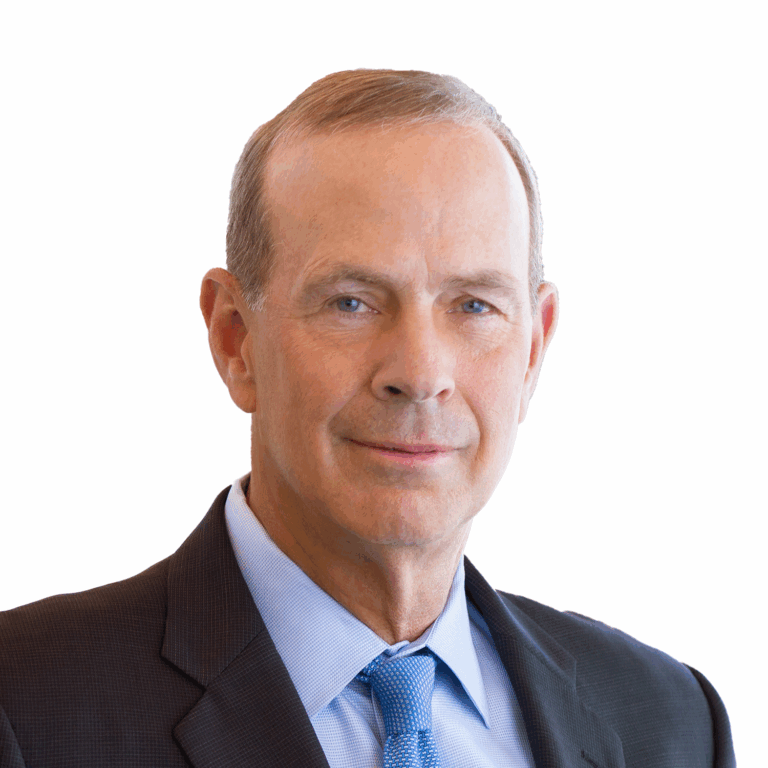
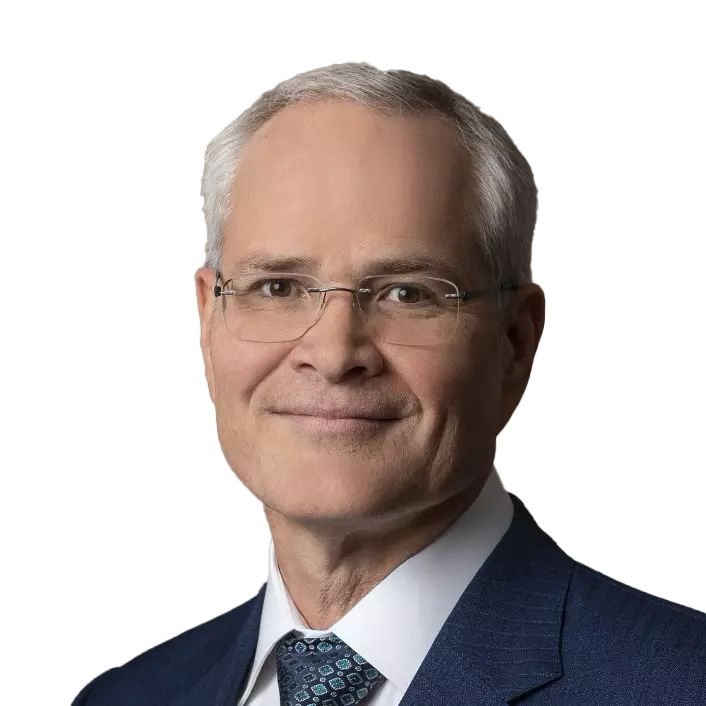
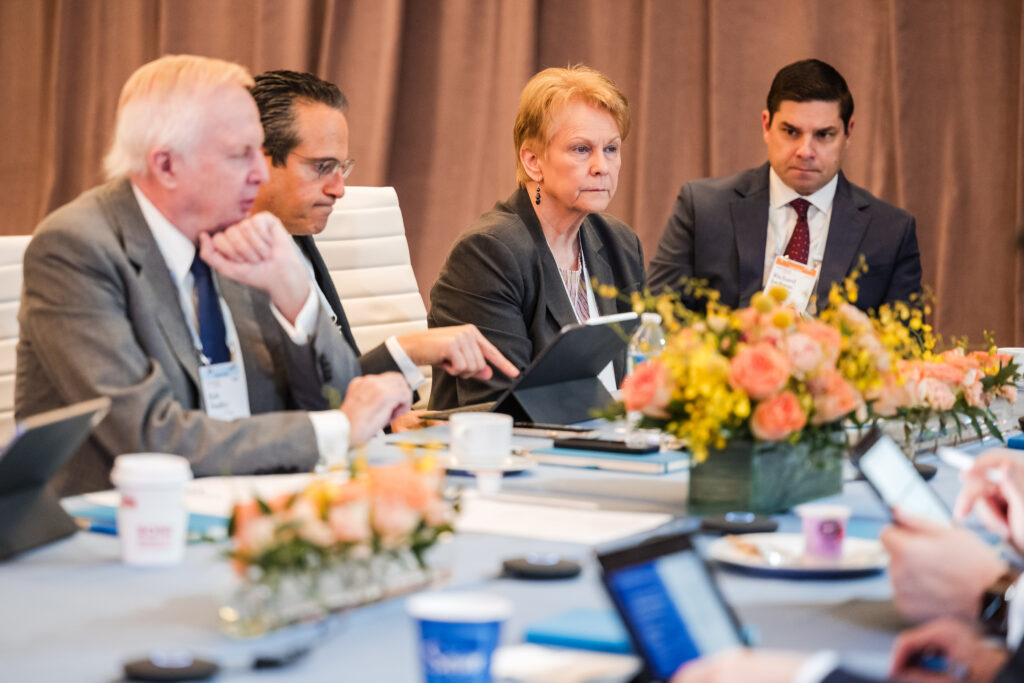
OGCI CEOs at March meeting. Credit: OGCI

CEO foreword – Staying the course

A decade ago, we had a vision of how leading oil and gas companies could contribute to one of the defining challenges of our age.

This vision has become a reality and now engages an even broader global community beyond OGCI, through the Oil & Gas Decarbonization Charter (OGDC), which
we helped launch in 2023.

As OGCI, we are a diverse group of companies that have already demonstrated what’s possible when we work together toward shared ambitions. Our leadership in methane emissions reduction is a case in point.

As CEOs, we meet regularly, we engage directly with each other and we invest our time and resources to help reduce emissions and accelerate the solutions needed for the energy transition.

OGCI’s ability to build bridges between state-owned and private companies, across Europe, the US, China, the Middle East, and South America is a core strength. Our global reach allows us to connect ideas with action at scale.

And by working with the OGDC, now representing 56 companies, we are expanding that impact, broadening our approach and amplifying our efforts, showing that together, we can help deliver meaningful action.

Reducing greenhouse gas emissions remains the core objective for OGCI. Our companies believe it’s important and we aim to deliver results in line with OGCI’s ambitions.

OGCI’s core mission remains unchanged

  • We will sustain our leadership on emissions reductions from upstream operations with a continued focus on reducing methane emissions and flaring.
  • We will continue to share knowledge and drive better performance measurement to spur continuous improvement.
  • And we will intensify our efforts to bring along the broader oil and gas industry – particularly in emerging economies – so that progress extends beyond our own members.
OGCI Chair Bob Dudley, Shell CEO Wael Sawan and Occidental CEO Vicki Hollub at March 2025 meeting. Credit: OGCI

OGCI Chair Bob Dudley, Shell CEO Wael Sawan and Occidental CEO Vicki Hollub at March 2025 meeting. Credit: OGCI

This year we reflected on the success of OGCI’s carbon intensity and methane intensity ambitions, which were set with a target date of 2025, and took the time to reassess our priorities for the next five years. This has included a comprehensive strategy review and an expanded CEO session this summer at one of our regular meetings.

The outcome was clear: OGCI’s three strategic pillars remain meaningful and will guide our updated priorities to 2030 through an action-oriented approach that remains focused on outcomes.

Our three strategic pillars 

  • Achieve net zero operations for OGCI members in the timeframe of the Paris Agreement, with a near-term objective to achieve near-zero methane emissions and eliminate routine flaring by 2030.
  • Demonstrate leadership and mobilize industry, such as through the OGDC, and other global initiatives.
  • Scale up solutions that accelerate and support the decarbonization of society.

A central part of our strategy is the synergy between OGCI and OGDC. Combining OGCI’s practical experience and technical expertise with OGDC’s global reach, gives us a powerful platform to mobilize industry-wide change.

OGCI's AGGREGATE PROGRESS IN 2024 1

  • Upstream operated carbon intensity: 17.2 kg CO2e/boe – a 24% decrease since 2017, close to our 17.0 kg CO2e/boe ambition by 2025.
  • Upstream operated methane intensity: 0.12% – a 62% decrease since 2017, well below our 0.20% ambition.
  • Routine flaring: 72% below 2018 levels, demonstrating progress to OGCI’s ambition to end routine flaring by 2030.2
  • Low-carbon investment: $30 billion in 2024, including projects, acquisitions and R&D, bringing the cumulative total since 2017 to $125 billion.3
  • CCUS projects: Our companies are involved in developing more than 50 projects, with the potential to reduce and/ or remove as much as 500 Mt of CO2 a year,4 by 2030.
  • Additional progress: Expanded efforts to reduce transport emissions and advance high-quality, internationally tradeable carbon credits for natural climate solutions projects.

Working together enables us to share best practices, strengthen ambitions and support implementation across diverse regions, helping to amplify the pace and scale of emissions reductions. Our successful satellite methane monitoring campaigns, progress on developing CCUS hubs and work to reduce emissions from transport demonstrate the power of collective action.

Throughout, our priorities will be underpinned by a commitment to transparency, improved reporting and expanded measurement, ensuring continuous improvement in emissions reduction.

What we are doing together represents major emissions reduction opportunities and reinforces the important role of the oil and gas sector in supporting a net-zero emissions future.

We are building on solid foundations. And while we are proud of our progress since the last annual report, we know that even more can be achieved.

Looking ahead

The long-term challenge is that the world needs more energy, but with lower emissions. As the world advances toward net zero, it’s critical that we continue to work across sectors to provide solutions that balance addressing climate change and reducing energy poverty.

We are encouraged by what we have achieved and motivated to do more. 

Petrobras CEO Magda Chambriard at March 2025 meeting. Credit: OGCI

Petrobras CEO Magda Chambriard at March 2025 meeting. Credit: OGCI

Amin Nasser

CEO Aramco

Murray Auchincloss

CEO bp plc

Michael K. Wirth

CEO Chevron Corporation

Dai Houliang

CEO CNPC

Claudio Descalzi

CEO Eni S.p.A

Anders Opedal

CEO Equinor ASA

Darren Woods

CEO Exxon Mobil Corporation

Vicki Hollub

CEO Occidental

Magda Chambriard

CEO Petróleo Brasileiro SA

Josu Jon Imaz

CEO Repsol S.A.

Wael Sawan

CEO Shell plc

Patrick Pouyanné

CEO TotalEnergies SE

Petrobras in focus

Petrobras has reduced GHG emissions by 40% since 2015

Brazil’s Amazon rainforest Credit: Anderson Coelho E+ pela Getty Images
By Petrobras CEO Magda Chambriard

Since joining the Oil and Gas Climate Initiative (OGCI), Petrobras has expanded its impact in South America, collaborating to reduce methane emissions, scale up carbon capture, utililzation and storage (CCUS), and improve energy efficiency. Petrobras is committed to a just and inclusive energy transition that delivers affordable, reliable, and sustainable energy for all.

In Brazil, Petrobras reduces emissions by using advanced methane detection technologies, installing solar plants at refineries, developing CCUS projects, and producing lower-carbon fuels such as Diesel R (diesel with renewable content) and sustainable aviation fuel.

Since 2015, Petrobras has achieved a 40% reduction in absolute GHG emissions despite increased production, a 69% cut in upstream methane intensity, and a 26% decrease in GHG carbon intensity from oil and gas production, along with a 20% reduction in routine flaring compared to 2023. Additionally, refining GHG intensity has declined by 16% compared to 2015.

In 2023, Petrobras was one of the founding members of the Oil & Gas Decarbonization Charter (OGDC) at COP28. Together, OGCI and OGDC unite 56 companies across more than 100 countries to accelerate industrywide
emissions reductions toward net zero.

This year, Brazil is hosting the UN Climate Conference, COP 30. Petrobras supports the country’s decarbonization strategies to meet its nationally determined contribution goals, emphasizing costeffectiveness and the role of efficient, lower-emission fossil fuel production in sustaining economic growth. Aware of the complexity and scale of the challenge, the Brazilian government emphasizes the need for broad societal effort.

Petrobras partners with the public sector, universities, and other stakeholders to drive innovation, capacity building, and sustainable energy solutions that contribute to Brazil’s social, economic, and environmental development.

Looking ahead, Petrobras is dedicating $16.3 billion, representing 15% of our five-year investment plan, to low-carbon projects, reinforcing our commitment to Brazil’s energy transition and global climate goals.

OGCI 2024 data highlights5

OGCI members' total operated oil and gas production

Mboe/day

0

of global output 6

0 %

of global greenhouse gas emissions7

0 %

OGCI members' upstream operated carbon intensity, methane intensity, flaring

upstream operated carbon intensity vs 2017

- 0 %

upstream operated methane intensity vs 2017

- 0 %

upstream routine gas flaring vs 2018

- 0 %

OGCI members' low-carbon investment8

total in 2024

$ 0 bn

cumulative total since 2017

$ 0 bn
  1. All figures taken from OGCI Performance Data for 2024, Chapter 4. Data and percentages are rounded.
  2. As per World Bank Zero Routine Flaring Initiative.
  3. Figures are rounded.
  4. Based on reported CCUS projects which average 7.5-10 Mt each. See p. 32 for map detailing projects OGCI members companies are involved in developing.
  5. OGCI 2024 Performance Data, Chapter 4. Percentages have been rounded. All reported data is the aggregate for 12 companies, (unless otherwise stated in the tables), and independently verified by EY. One member company has been unable to submit audited performance data in time for the publication of the 2024 Progress Report and 2022 data for that company has been used in place of the 2023 data. The company was unable to provide the full set of data for 2024. The missing data has been estimated using 2022 data as a reference. Data for 2023 and 2024 will be updated as needed in the next annual Progress Report, which is expected to be published in the fourth quarter of 2026.
  6. Provisional estimate of global oil and gas production of approximately 165.5 Mboe/day in 2024, based on IEA indicators for oil production of 97.2 Mboe/ day and global natural gas production of 68.3 Mboe/day. OGCI member companies’ share of total oil and gas production is 25.7% on an operated basis and 25% on an equity basis. Source: IEA Oil Market Report (January 2025), IEA Gas Market Report Q1 2024.
  7. OGCI members upstream operated GHG emissions (Scope 1 and 2) in 2024 was 304 Mt CO2e (see OGCI Performance Data, Chapter 4). Total GHG emissions excluding land-use, land-use change and forestry (LULUCF) was 57.1 Gt CO2e in 2023, UNEP’s latest Emissions Gap Report published in 2024, p.4.
  8. Total low-carbon investment includes investment, acquisitions and research and development. Low-carbon energy technologies include but are not limited to wind, solar and other renewable energies, carbon-efficient energy management, carbon capture, utilization and storage, blue and green hydrogen, biofuels, synfuels, energy storage and sustainable mobility.