OCGI’s second strategic ambition is to work proactively with and encourage the entire oil and gas industry – from publicly traded multinationals to national oil and gas companies (NOCs) – to strive for net-zero operations in the timeframe of the Paris Agreement and to eliminate upstream routine flaring and aim for near zero methane emissions by 2030.
According to the International Energy Agency’s World Energy Outlook, the global oil and gas industry’s Scope 1 and 2 emissions totaled 5.1 Gt of CO2 equivalent in 2022.1 This represents around 10% of the global total,2 demonstrating the potential contribution the oil and gas industry can make towards the emissions reduction effort on the path to net zero.
In 2024, OGCI members produced approximately 25% of the world’s total oil and gas on an operated basis.3
OGCI members’ aggregate upstream operated Scope 1 and 2 GHG emissions totalled 304 Mt CO2e, representing 0.5% of global GHG emissions, using latest 2023 data from UNEP’s Emissions Gap Report published in 2024.4
With more than 10 years’ of experience reducing emissions, OGCI is committed to encouraging the entire industry to work toward net-zero operations. The organization and its 12 member companies work closely with peers in the sector – in particular through the Oil & Gas Decarbonization Charter (OGDC).
OGCI works with companies to foster innovation, promote the scaling of key technologies and disseminate expertise and best practice.
In 2024 and 2025, OGCI’s efforts focused on two core areas:
- Reducing methane emissions: Working with the broader industry to reduce methane emissions and intensity including through OGCI’s flagship Satellite Monitoring Campaign and other related initiatives.
- Collaborating with OGDC: Providing technical expertise and insights to the OGDC’s 56 signatories to help accelerate and scale emissions reductions across a broader network of companies. OGCI is OGDC’s Secretariat, facilitating increased collaboration. See OGDC Baselining Report5 for more information.
Credit: Adobe Stock
Working with the sector to reduce methane emissions
According to the IEA, the oil and gas sector accounts for around 23% of all methane emissions attributable to human activities.6
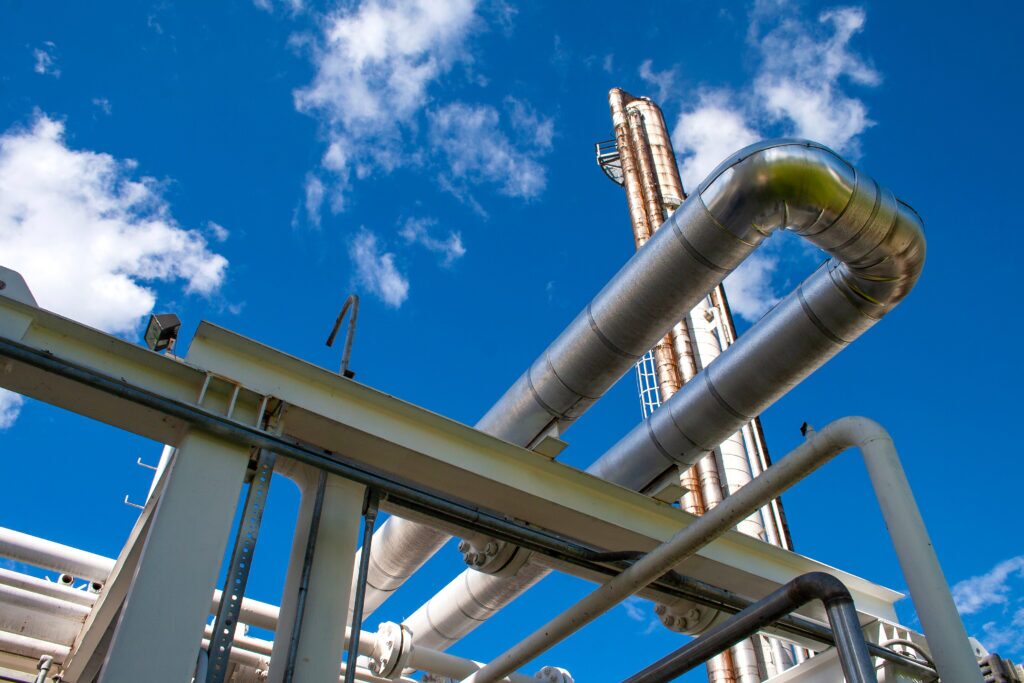
Common sources of methane emissions from oil and gas operations include flaring, venting, fugitives, gathering pipeline emissions and pneumatic devices.
Although it remains in the atmosphere for less time than other greenhouse gases, methane is more than 28 times as potent as CO2 at trapping heat in the
atmosphere on a 100-year time horizon.7
This is why reducing methane emissions from oil and gas operations represents an important near-term opportunity to contribute to progress toward the Paris Agreement goals.8
OGCI member companies aim to achieve near-zero methane emissions at their upstream operations by 2030. Their success in reducing upstream methane emissions has demonstrated that meaningful and cost-effective opportunities exist to support rapid reductions in methane emissions in the oil and gas industry.
The reach of OGCI’s upstream operated methane emissions ambition (defined as methane intensity of below 0.20%) continues to grow. OGCI’s methane intensity ambition is now widely used across industry and in legislation as a benchmark of best practice.
It also underpins OGDC’s near-zero upstream methane emissions ambition.9
OGCI is working on multiple fronts, including through the OGDC, to help the industry identify short- and long-term measures that will help deliver a sector-wide reduction in methane emissions.
In 2024 and 2025, these efforts have included:
- An expansion of OGCI’s flagship Satellite Monitoring Campaign to include more countries and operators – doubling the number of assets and countries involved. (p.21)
- The creation of OGCI’s Methane Library, a publicly available resource providing information on the technologies, tools and strategies that can help oil and gas companies to reduce methane emissions and flaring. (p.22)
- Work on an SMC Playbook containing practical guidance for oil and gas operators responding to satellite detections.
- The launch, together with Ipieca, IOGP and the Energy Institute, of an update to the previous joint recommended practices guide to help oil and gas operators choose and deploy methane detection and quantification technologies. (p. 23)
- Promoting the goals of the Aiming for Zero Emissions Initiative, a campaign launched by OGCI that calls for an all-in approach that treats methane emissions as seriously as the oil and gas industry already treats safety: aiming for zero and striving to do what is needed to get there. (p. 24)
- The text of the Aiming for Zero Methane Emissions initiative has been adopted in the OGDC charter.10
SOME COMMON SOURCES OF METHANE EMISSIONS

Flaring

Venting

Fugitives

Gathering pipeline emissions

Pneumatic devices

GHGSat methane-detecting satellites in orbit. Credit GHGSat.
Monitoring methane emissions from space
Methane gas is invisible. So an important step toward mitigating methane emissions is detecting and measuring them.
OGCI’s Satellite Monitoring Campaign (SMC), conducted in partnership with satellite providers and to date with GHGSat,11 has helped raise awareness about the benefits of using satellites as part of a strategy to reduce methane emissions, while helping oil and gas companies detect and
monitor their methane emissions through peer-to-peer engagement.
The satellites are used to detect and monitor large methane emissions events. Unlike other public satellite monitoring, OGCI’s SMC uses high-resolution imagery and is looking at specific facilities so is more likely to detect a large event than other satellites which pass over a very large area.
Also unique to OGCI’s SMC is the confidential engagement on a peer-to-peer level with local operators to help them reduce the methane emissions detected.
OGCI’s campaign uses the data to help local operators indentify emissions sources, and OGCI member companies share knowledge on potential
solutions to support the operators’ work to abate the emissions.
OGCI engages regularly with the World Bank’s Global Flaring and Methane Reduction Partnership (GFMR) on how to best use technologies such as satellite monitoring and detection to support countries and companies to abate their methane emissions.
OGCI supported the launch of the GFMR and some of its member companies are among its anchor funders.
2021
Pilot
A successful nine-month pilot in Iraq during which GHGSat collected high-resolution satellite data on methane plumes from

six oil fields
OGCI and Carbon Limits, an expert consultancy company, engaged confidentially with local operators to identify emissions sources and shared knowledge on potential abatement solutions. The pilot helped local operators address methane plumes of an estimated equivalent of around 1 Mt of CO2e11
2022–2023
Phase 2
Expansion of the campaign to Kazakhstan, Algeria and Egypt. This campaign helped operators eliminate plumes that were emitting methane at a combined average rate of
3,200
kilograms per hour
This helped local operators address an estimated equivalent of around 1 Mt of CO2e11
2024–2025
Phase 3
The campaign was expanded to cover more than

30 assets
across more countries, including in Central Asia and North Africa.
This will help encourage further industry-wide reductions in methane emissions while building operators’ technical knowledge so they can capitalize on the growing availability of satellite data.
OGCI shares expertise with industry
In 2025, OGCI launched its digital library to help companies find the strategies, tools and technologies they need to reduce their methane emissions.
The methane library includes around 300 resources covering the full range of topics related to cutting methane emissions and flaring.
This includes up-to-date information on methods of detection, tools to quantify and assess emissions, guidelines and best practices that have already proven successful in the past, and regulatory frameworks.
The resources are drawn from external sources. These include global organizations such as the International Energy Agency, UNEP’s Oil & Gas Methane Partnership 2.0 and the World Bank, along with government agencies in multiple countries. Searchers can also tap into academic papers and think tank reports, along with some OGCI publications.
Learn more at: methanelibrary.ogci.com

“As an Environmental Policy Manager at Oxy, I’ve seen how much progress we’ve made in cutting methane emissions. But for companies just starting the process, finding the right information can be challenging. That’s why I value the OGCI methane library—it brings everything together and makes it easier for others to learn from what’s already working.”
Angela Zivkovich, Occidental Environmental Policy Manager and OGCI Role of Gas member

As part of OGCI’s strategy to help local operators and national oil companies identify and prioritize methane emissions mitigation opportunities, OGCI supports
Carbon Limits’ development and wider deployment of its Mist tool that enables firms to develop a better understanding of their methane emissions inventory.
OGCI’s support includes funding and pilot deployment and training on the Mist tool for national oil companies including in the Middle East and North Africa, West and East Africa, Central Asia and elsewhere.
The Mist tool is free software that combines latest research with data provided by the company to start developing an emissions inventory and management.
The tool can support companies at any stage of their efforts to reduce methane emissions. This includes companies providing estimates based on emissions factors to those that are based on measurements and engineering calculations.
The data is provided at equipment or source level and aggregated at facility and company level.
Importantly, the tool relies on best available international standards to quantify emissions and is aligned with the UN’s Oil & Gas Methane Partnership level 3 and
level 4 reporting.
The tool also assesses abatement potential and associated costs at facilities to enable targeted reductions.
The scenario analysis module developed with OGCI’s support also allows companies to prioritize actions, determine emissions reduction targets and assess financing needs.
The tool also assesses abatement potential and associated costs at facilities to enable targeted reductions.
Mist allows companies to:
- Better understand methane emission sources at each facility
- Build source-level methane inventories
- Perform a single site reconciliation
- Use advanced quantification methods
- Prepare emissions reports for OGMP 2.0
- Estimate abatement potential and costs
- Identify and prioritize mitigation efforts
- Determine targets and financing needs

Updated methane detection guidelines
To ensure that oil and gas operators working to better detect and measure emissions stay abreast of the latest innovations, OGCI teamed up with Ipieca, IOGP and the Energy Institute to update its guide to best practices on how to choose and use methane detection and quantification technologies.
The 2025 edition of the guide has been updated with information on six new technologies, along with new information on 14 others.
To help oil and gas companies choose methane detection methods tailored to their needs and circumstances, the guide includes an online technology filtering tool, detailed data sheets covering 56 technologies and decision trees to help operators deploy solutions. See guidelines here.


The Aiming for Zero Methane Emissions Initiative
OGCI continues to promote the ambitions of the Aiming for Zero Methane Emissions initiative it launched in 2022.
The initiative states that the oil and gas industry can and should lead the effort to strive for near zero methane emissions by 2030.
The initiative is underpinned by OGCI’s ambition of well below 0.20% upstream methane intensity.
In 2024, Angolan state oil and gas company Sonangol and Australian energy company Santos joined around 100 other signatories and supporters already signed up to the ambition.
Aiming for near-zero upstream methane emissions by 2030 is also a core ambition for OGDC’s 56 signatories.12
Signatories to Aiming for Zero include private and state-run energy companies. Supporters include service firms, technology providers, non-governmental organizations, and consultancies. Signatories pledge to:
- Aim: To strive to reach near zero methane emissions from operated oil and gas assets by 2030, and to encourage partners to achieve similar results.
- Minimize: To put in place all reasonable means to avoid methane venting and flaring and to repair detected leaks, while preserving the safety integrity of operations.
- Report: To report annually and transparently on their methane emissions.
- Monitor & measure: To supplement estimates with more monitoring and measurement technologies as they evolve, and to introduce new solutions to avoid methane emissions.
- Advocate: To support the implementation of sound regulations to tackle methane emissions.
OGDC: Building on strong foundations
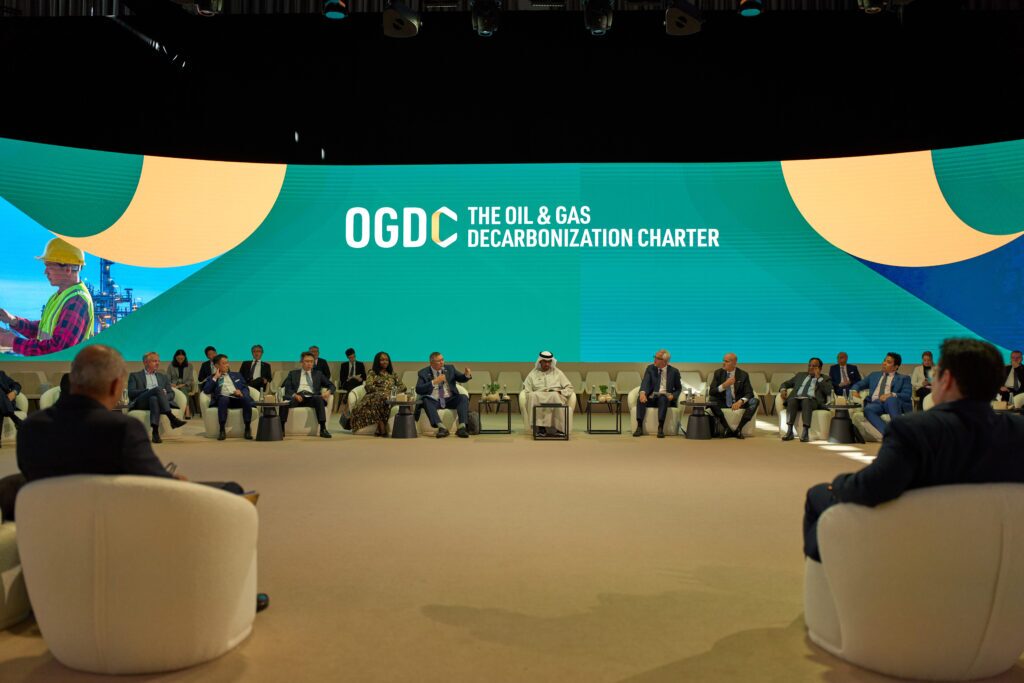
Credit: OGDC
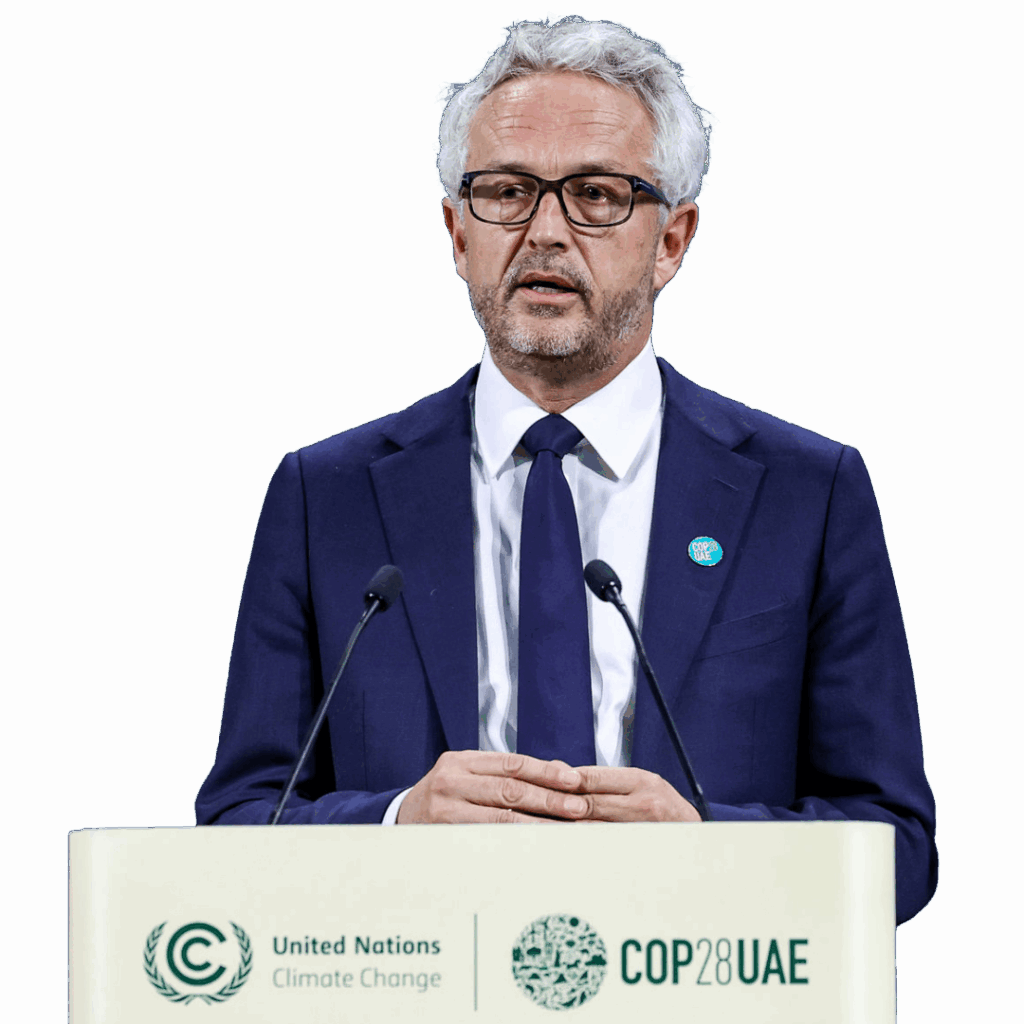
The OGDC was launched at COP28 in 2023. The CEOs of three signatory companies, Dr. Sultan Ahmed Al Jaber of Adnoc, Amin Nasser of Aramco and Patrick Pouyanné of TotalEnergies were appointed the organization’s champions for three years.
The OGDC’s ambitions are closely aligned with OGCI’s key ambitions. These include reducing upstream methane emissions to near zero and eliminating upstream routine flaring by 2030 on a path to net zero operations by 2050.13
OGCI acts as the secretariat for OGDC and supports OGDC with technical expertise, knowledge and insights. Eleven of OGCI’s members are signatories to OGDC, strengthening the joint effort to decarbonize the oil and gas industry.
Including 11 members of OGCI, OGDC now comprises 56 signatories and represents around 45% of global oil production.14
In 2024 and 2025, OGCI and its members have fostered cooperation and knowledge sharing with signatories.
This has included OGCI member companies, who are also signatories to OGDC, hosting webinars on topics such as methane emissions reductions, creating training materials on energy efficiency and peer-to-peer engagement on a country level. (See “Sharing knowledge” pg 26.)
OGCI members including Aramco, Eni, Equinor, ExxonMobil, Repsol, Shell and TotalEnergies, are also providing tailored support to OGDC signatories – from short consultations to mentorship programs and multi-week collaborations.
In 2025, the OGDC is applying the OGCI’s Reporting Framework as the basis for its reporting, providing comparable, robust data through transparent, accountable reporting.
This includes using existing definitions, methodologies and key performance indicators. OGDC will launch their second annual report in November this year at COP30 in Brazil. See OGDC’s report on their first year’s progress here.
“OGCI is proud of the role it has played supporting the implementation of the Charter’s aims to accelerate decarbonization globally and increase transparency in reporting. OGCI and its members are actively engaged in sharing knowledge, experience and best practices accumulated over a decade of work reducing emissions at their own oil and gas operations.”
Bjørn Otto Sverdrup, OGCI Executive Committee Chairman and Head of OGDC Secretariat
Sharing knowledge

Using AI to accelerate
decarbonization
Best practices in GHG
emissions reporting
Methane emissions
detection, quantification
and mitigation

Using a marginal abatement cost
curve to support GHG reductions
Challenges and opportunities reducing Scope 1 and 2 emissions, continuous monitoring of methane emissions
Energy efficiency: Process heat integration and internal best practices

Methane
emissions reporting
Reducing methane
emissions and flaring
Methane platform
overview
- OGCI’s Role of Gas workstream is providing satellite data to several OGDC signatories as part of OGCI’s satellite monitoring campaign. OGCI member companies also provide technical support and capacity building to operators to support methane reduction following emissions detections.
- OGCI’s Energy Efficiency workstream is working with OGDC to develop a set of training modules on energy efficiency.
- OGCI’s Reporting Taskforce supports OGDC on the reporting framework so they can use existing definitions and key performance indicators to accelerate consistent and credible report and transparency.
- OGCI’s Carbon Capture, Utilization and Storage workstream provided technical guidance and support to an OGDC signatory seeking country-specific information and invited the signatory to a private roundtable on CCUS.
- IEA World Energy Outlook 2023, Emisions from Oil and Gas Operations in Net Zero Transitions.
- https://edgar.jrc.ec.europa.eu/report_2024#emissions_table. Global total GHG emissions in 2023 52.96 Gt of CO2e.
- Based on provisional estimate of global oil and gas production of approximately 166 Mboe/day in 2024, based on IEA indicators for oil production of 97.2 Mboe/ day and global natural gas production of 68.3 Mboe/day. OGCI member companies’ share of total oil and gas production is 25.4% on an operated basis and 21.5% on an equity basis. Source: IEA Oil Market Report (January 2025), IEA Gas Market Report Q1 2024. According to OGCI Performance Data, OGCI member companies’ total operated oil and gas production was 42.2 Mboe/day in 2024.
- Total GHG emissions excluding LULUCF was 57 Gt CO2e in 2023, UNEP’s latest Emissions Gap Report published in 2024, p. 4. OGCI’s aggregate upstream operated GHG emissions (Scope 1 and 2) was 304 Mt CO2e in 2024, OGCI Performance Data. See Chapter 4.
- www.ogdc.org/2024-a-baseline-for-action/
- www.iea.org/reports/global-methane-tracker-2025/key-findings
- IPCC, using GWP of AR 5. Global-Warming-Potential-Values (August 2024).pdf
- www.iea.org/reports/global-methane-tracker-2025/key-findings
- www.ogdc.org/oil-gas-decarbonization-charter/
- A Climate Investment portfolio company
- If these plumes were from continuously emitting sources and were not abated, they could amount to an estimated equivalent of around 1 Mt of CO2e over the course of one year. Using IPCC AR6 global warming potential for methane over 100-year time horizon.
- See OGDC Charter, section II.2 www.ogdc.org/oil-gas-decarbonization-charter/
- See OGDC Charter, www.ogdc.org/oil-gas-decarbonization-charter/
- At the time of this report’s publication.